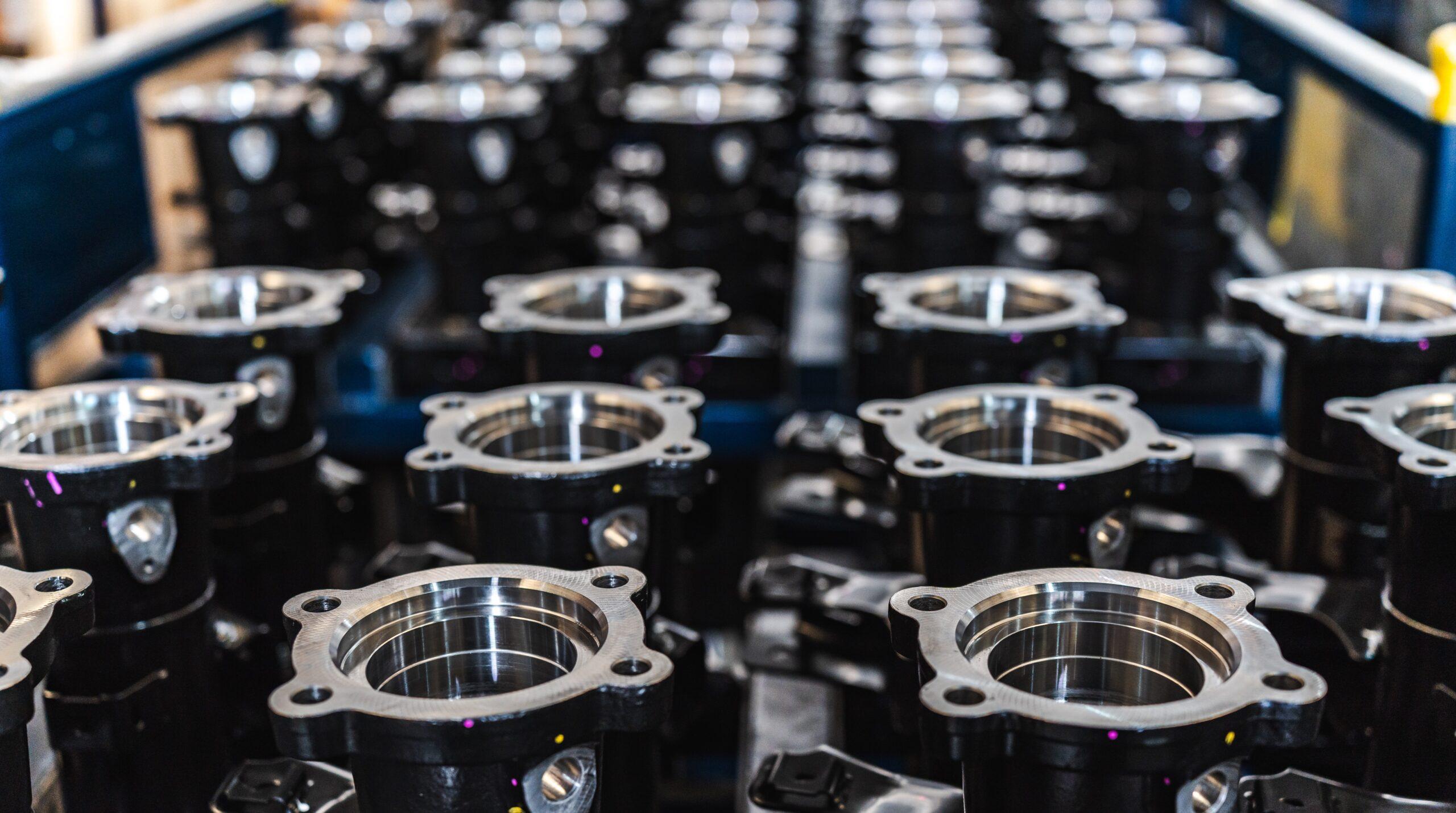
When a product begins to take shape, an important question arises: How many units should be manufactured? It’s not always enough to simply order a prototype, because needs change as the project progresses. In some cases, a single unit is needed to verify a measurement; in others, several units are required to conduct usability tests, validate the assembly, or provide samples to customers.
Making the right choice between a prototype, a pre-production run, or a short production run allows you to control your investment, reduce risks, and obtain the necessary information before moving on to mass production. The decision depends not only on the stage of development, but also on what you want to validate, how many people will use the parts, and how closely they should resemble the final product.
When do you need a prototype?
A prototype can be used to test the shape, dimensions, ergonomics, assembly, or functionality of a solution before manufacturing additional units.
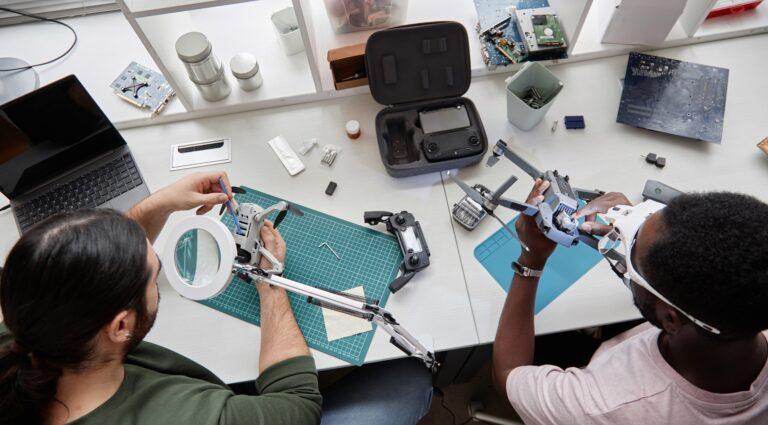
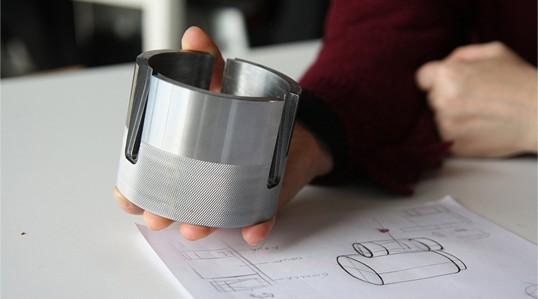
Not all prototypes need to be exact replicas of the final product. In the early stages, a simple part that allows you to validate the dimensions and overall appearance may be sufficient. Later on, it may be necessary to build a functional prototype using technical materials, with specific tolerances and properties similar to those intended for the final product.
Manufacturing one or a few units is usually the right approach when:
- The design is still subject to significant changes.
- We want to verify that several parts fit together correctly.
- It is necessary to test a geometry, mechanism, or technical solution.
- Different versions of the same design should be compared.
- The product has not yet been validated with users or customers.
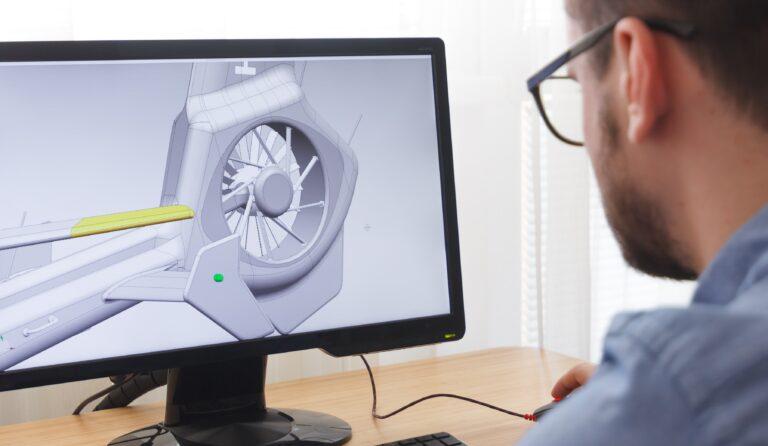
At this stage, speed and the ability to modify the CAD file are more important than achieving a low unit cost. Technologies such as 3D printing and CNC machining make it possible to manufacture parts directly from the 3D model, without the need for upfront investment in complex molds or tooling.
Pre-production: Validate Before Moving to Production
A pre-series is a limited batch of units manufactured before beginning full-scale production. Its purpose is not merely to test whether a single part works, but to verify that the entire product can be manufactured, assembled, and used consistently.
While a prototype can be built individually and undergo certain manual adjustments, pre-production units must be sufficiently uniform. This makes it possible to identify problems that might not become apparent when manufacturing a single piece.
A preserie can be used for:
- Conduct usability tests with multiple users.
- Validate the assembly process.
- Check the repeatability between units.
- Conduct functional or durability tests.
- Prepare sales demonstrations or samples for distributors.
- Identify problems before investing in permanent production equipment.
There is no universal quantity for classifying a batch as a pre-production batch. The volume will depend on the product and the purpose of the validation. For one company, five units may be sufficient, while another may need twenty, fifty, or more to conduct tests at different locations.
The key is to manufacture enough units to obtain representative data, but without producing more parts than necessary while the design is still subject to change.
When is it a good idea to produce a short run?
A short run is a limited production run of items typically intended for actual use. Unlike a pre-production run, its purpose may already be commercial: to fulfill initial orders, manufacture a specialized product, meet limited demand, or produce customized variants.
Short series are especially useful when:
- Initial demand remains uncertain.
- The product is aimed at a niche market.
- There are different versions or configurations.
- The parts are manufactured to order.
- The company wants to launch the product without investing in an injection mold just yet.
- It is necessary to have spare parts or discontinued components on hand.
3D printing allows for the production of functional parts made of PA12 or flexible materials without the need for molds and is well-suited for prototypes and short runs. CNC machining, on the other hand, enables the production of limited series in metals and engineering plastics when precision, strength, or the use of the final material is required. Furthermore, vacuum casting can be an alternative when multiple similar plastic parts are needed, with high-quality finishes and properties similar to those of a molded part.
How do you choose the right volume?
Before placing an order for parts, it is a good idea to answer four questions:
1. What do you need to validate?
If you just want to check a measurement or a fit, a single unit may be enough. To evaluate the assembly, durability, or the experience of different users, you’ll probably need several.
2. Is the design finalized?
When changes are still expected, manufacturing a large batch increases the risk of ending up with parts that will soon become obsolete. In that case, it is better to proceed in small iterations.
3. Will the parts be used under real-world conditions?
A visual model does not have to meet the same requirements as a part that is subjected to impacts, temperature, friction, or mechanical loads. The intended use will determine both the material and the manufacturing technology.
4. Do you need to sell them, or just try them out?
If the units are to be delivered to customers, they must demonstrate greater consistency, a proper finish, and stable performance. This may justify moving from a prototype to a pre-production run or short production run.
PROTO&GO!: Custom Prototypes and Small-Batch Production
The best option is not always the one with the lowest cost per unit. Manufacturing more parts reduces the unit price in some processes, but it can significantly increase the investment and risk if the design has not yet been validated.
At Proto&Go!, we manufacture parts and prototypes using CNC machining, 3D printing, and silicone molds, tailoring the technology to the volume, material, and objective of each project. You can upload your 3D files to our platform and receive a feasibility analysis and a quote in less than 24 hours.
Upload your file and receive your quote online now.