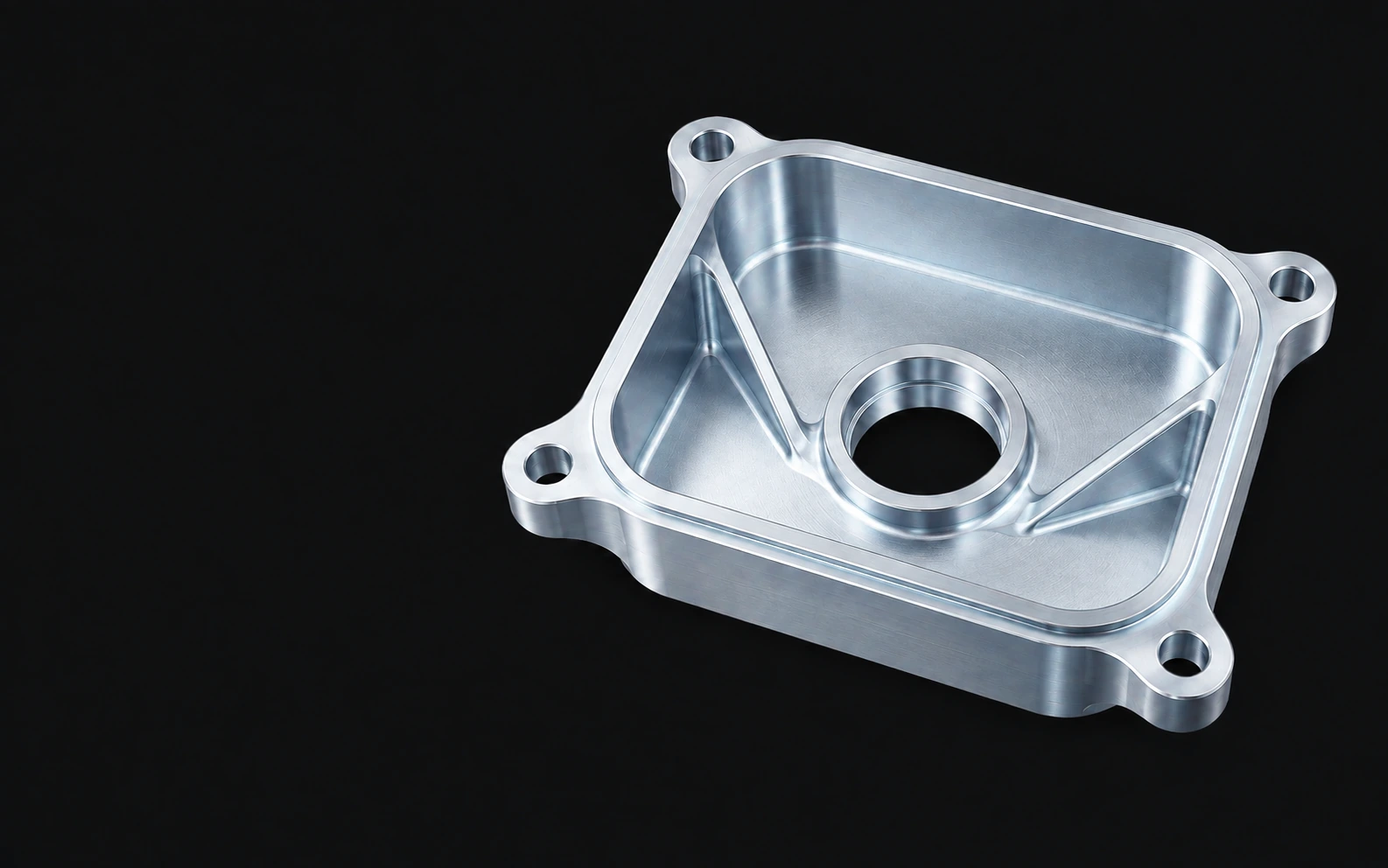
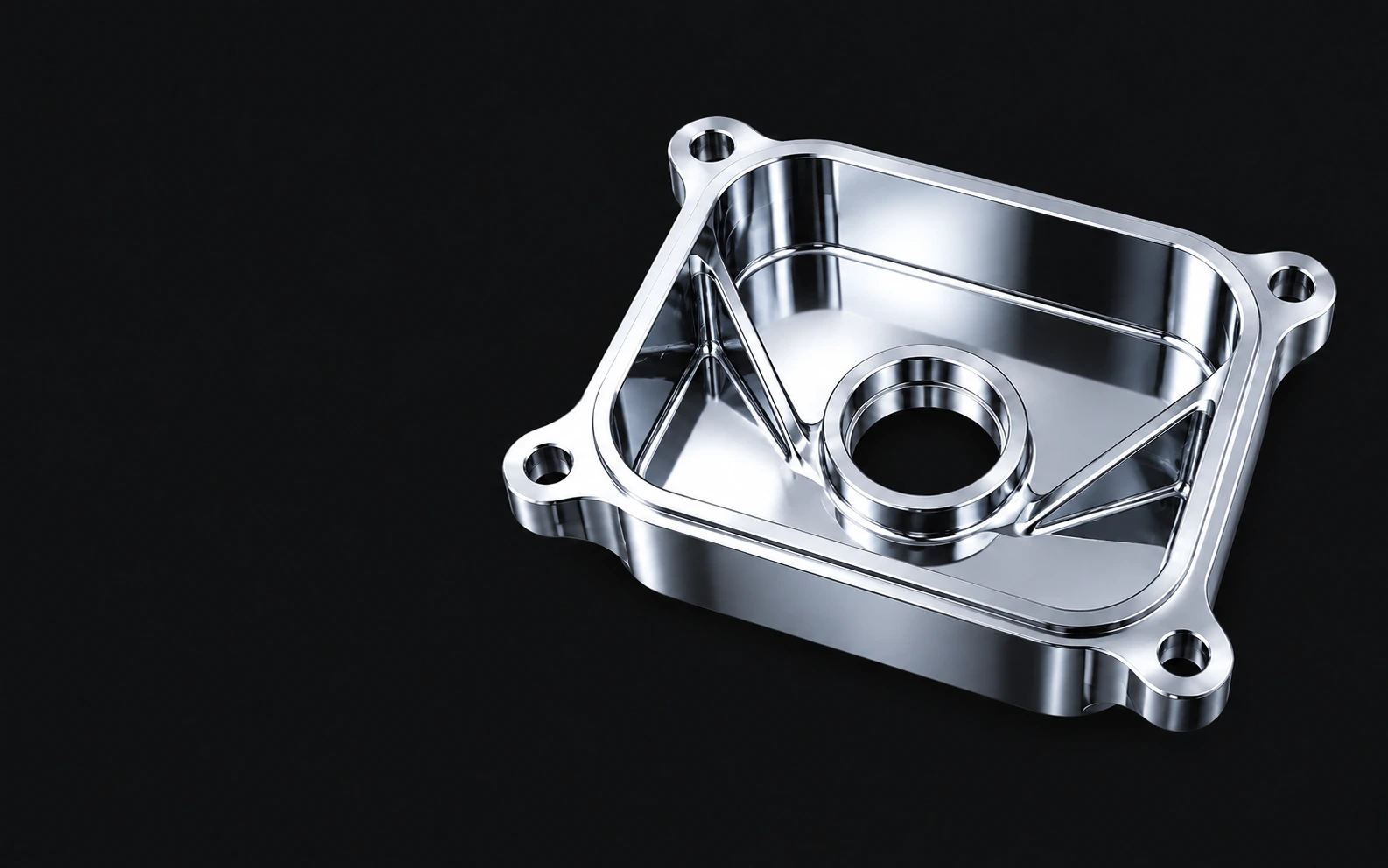
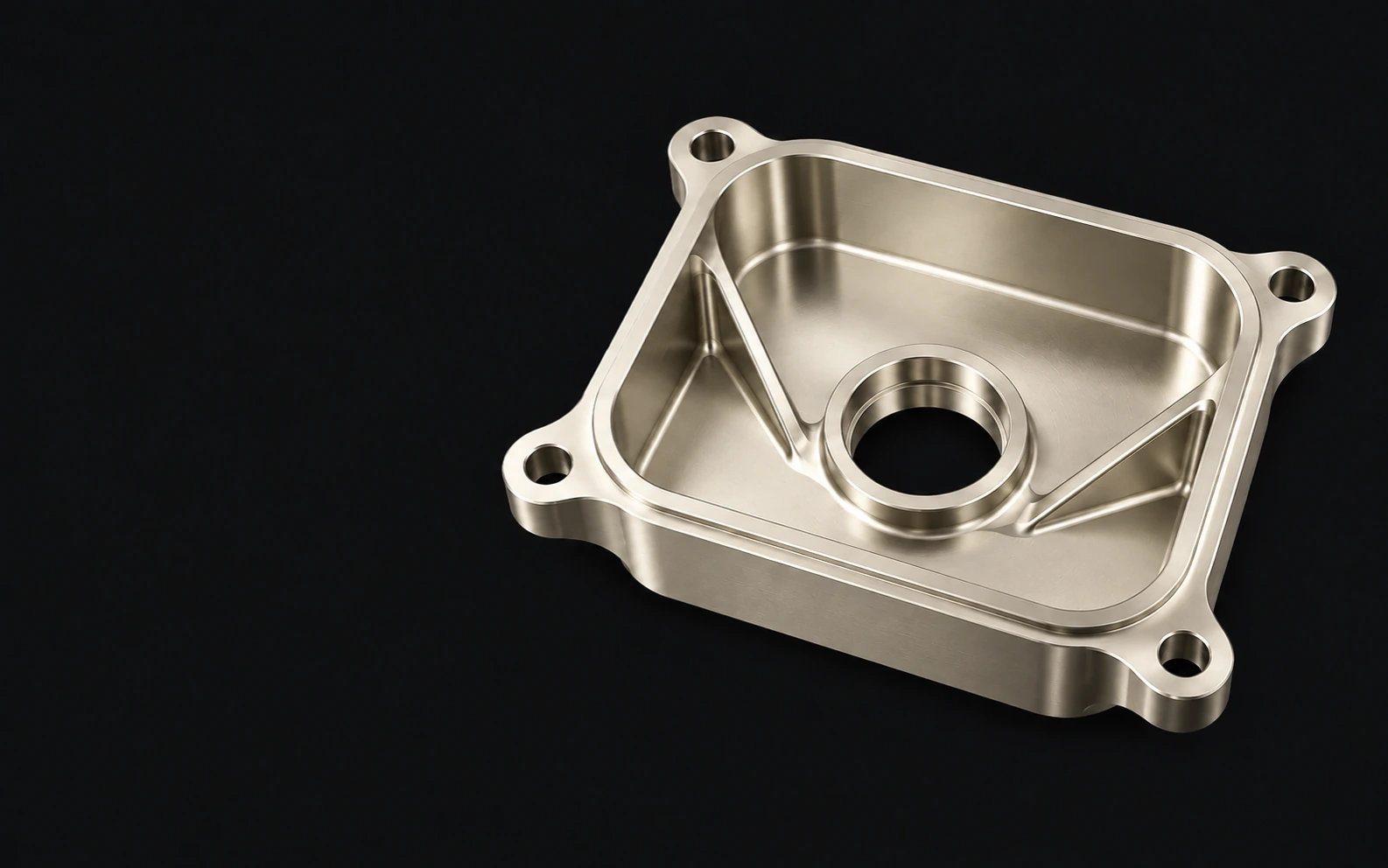
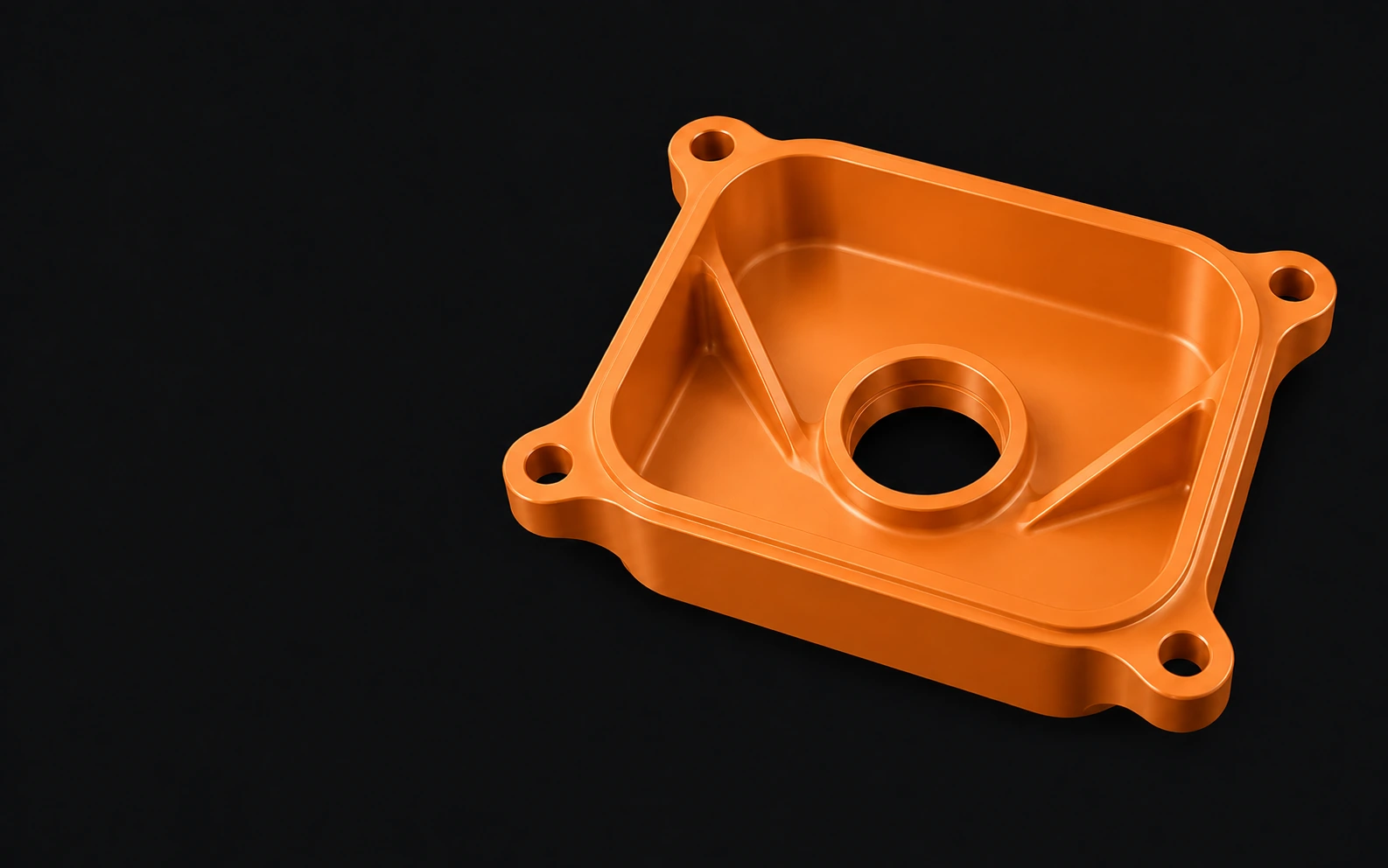
The nine in the table, according to the material.
Anodizing only on aluminum; bluing and zinc plating, on steel. Sandblasting, chrome plating, nickel plating, and RAL painting, on almost all.
Finishes in machining

Finishes
Nine finishes for machining and sheet metal, two for 3D printing and the standard color in vacuum casting: what each one protects, what it does to dimensions and which material it goes with.
01 / The same housing, nine finishes
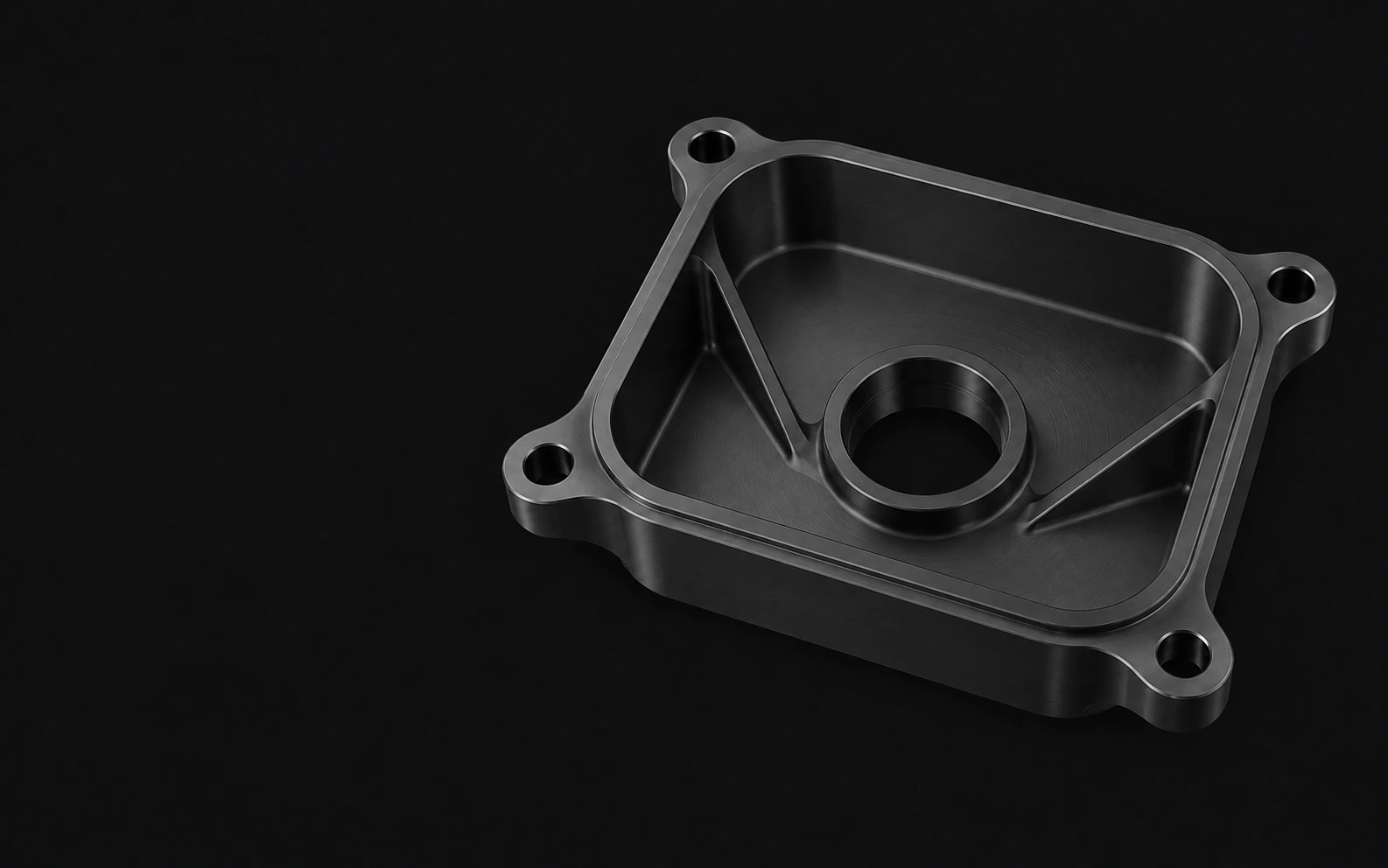
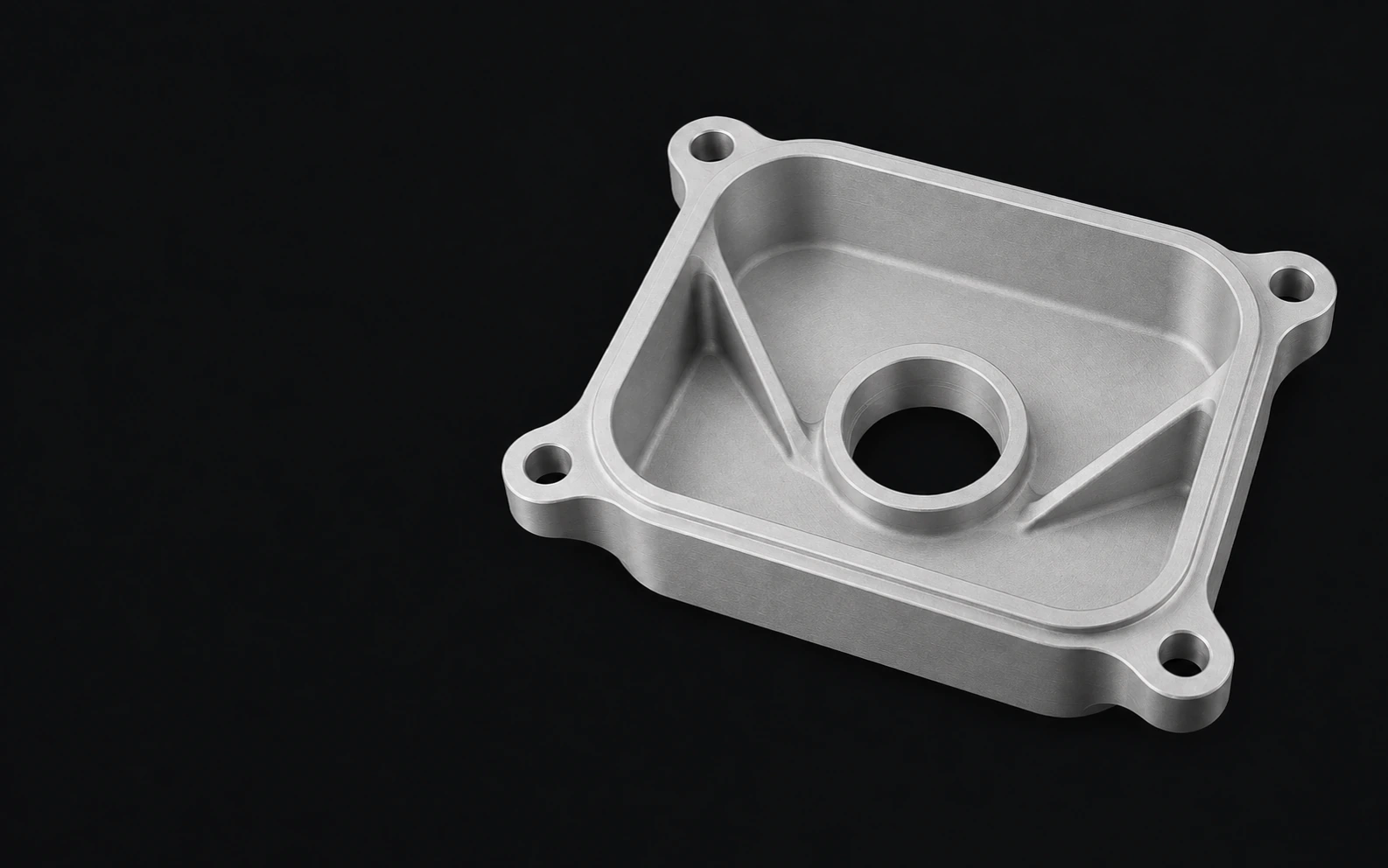
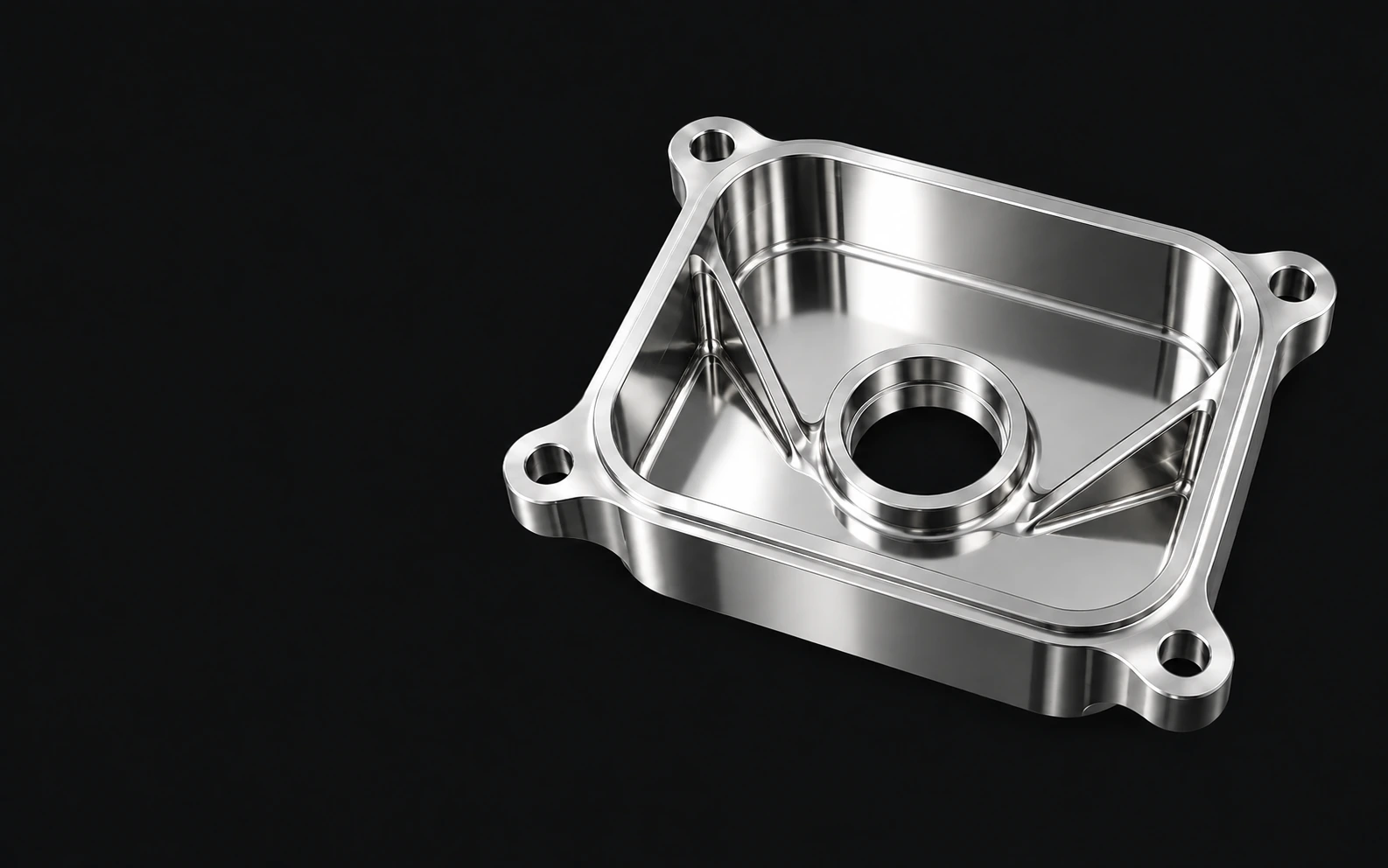
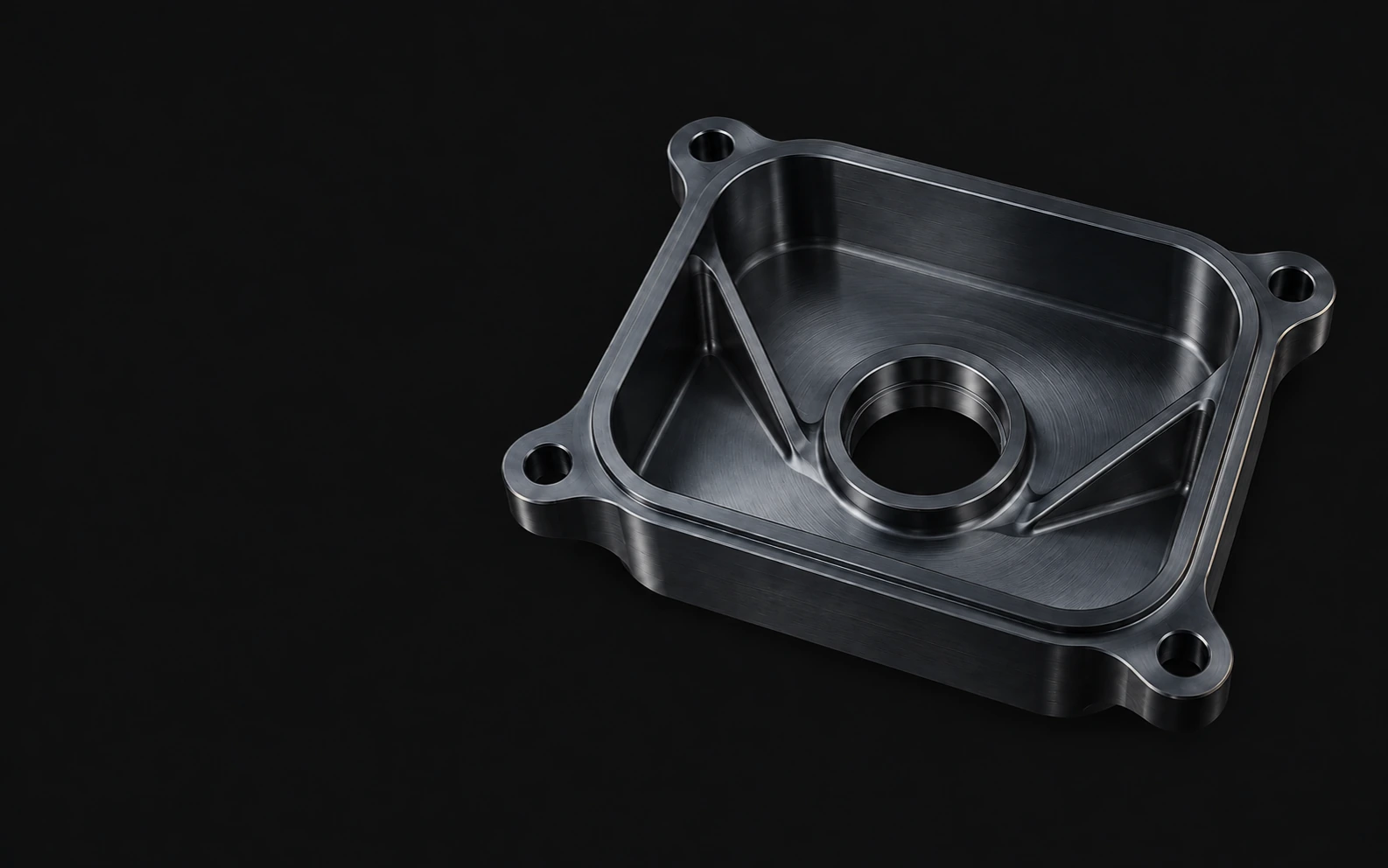
A machined aluminum housing with each available finish and its effect on dimensions. Click each one to see it.
How to choose the finish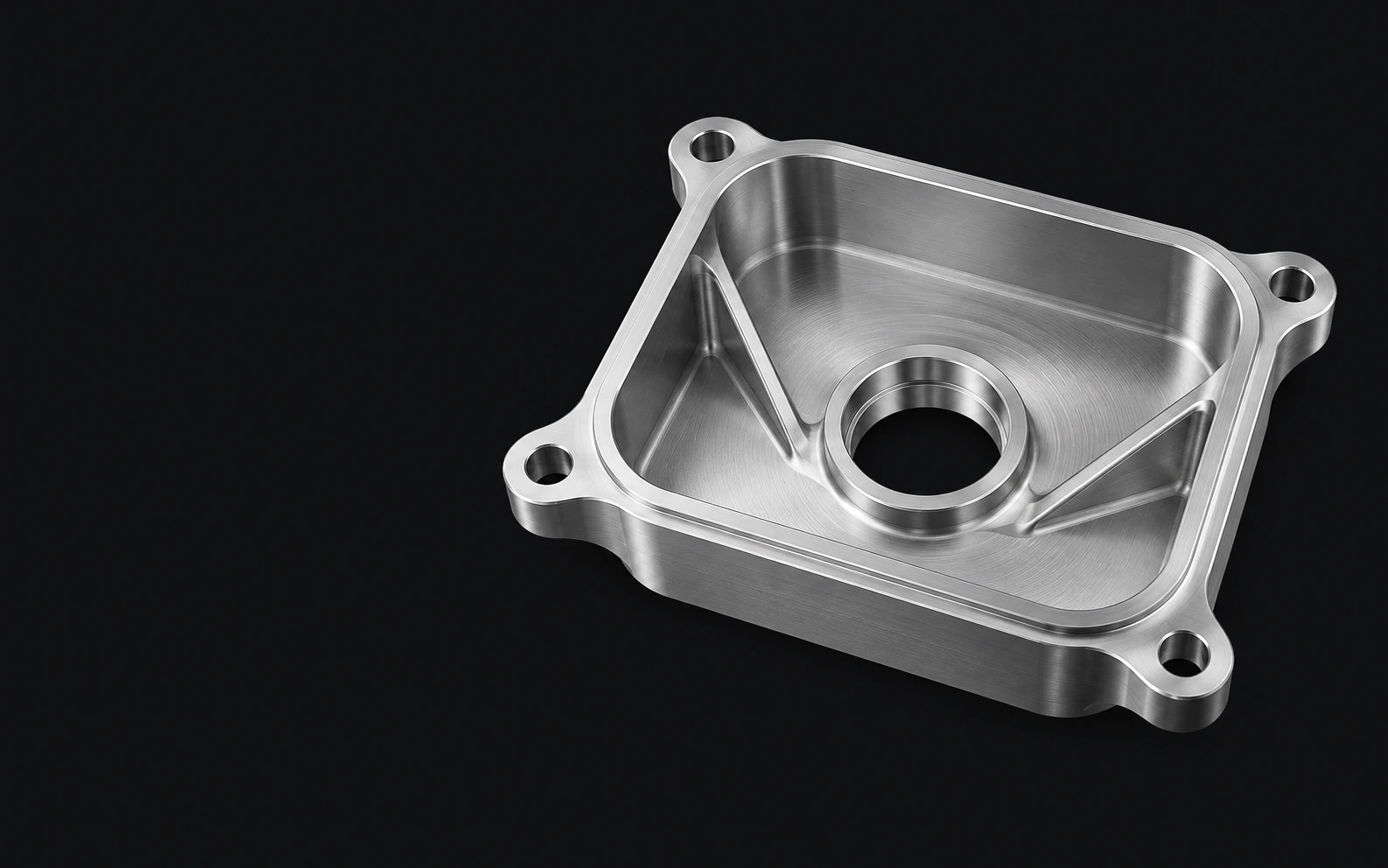
02 / Compatibility and dimensions
Nine finishes for machined and sheet metal parts. The indicative dimensions show how much each face grows or shrinks.
| Finish | Materials | Indicative dimensions | What it is for |
|---|---|---|---|
| 00No finish | AlSteelInoxBrassPlastic | Those from the 3D model | Functional or internal parts. Fine tool marks remain: up to Ra 1.6 µm in machining. |
| 01Anodizing | Al | +2.5 to 12.5 µm per face | Protects aluminum from corrosion and wear and takes color. A shaft grows and a hole shrinks: allow for it in fits. |
| 02Sandblasting | AlSteelInoxBrassPlastic | No significant effect | Matte and uniform appearance; hides tool marks. Usually applied before anodizing. |
| 03Polishing | InoxBrassAl | −5 a 20 µm | Gloss and a smooth surface on visible parts. Removes material: mask the fit dimensions. |
| 04Bluing | Steel | No significant effect | Light protective black layer for steel, without changing dimensions. |
| 05Zinc plating | Steel | +5 a 15 µm | Protection against steel corrosion with a metallic appearance. |
| 06Chrome plating | SteelBrassAlPlastic | +10 a 30 µm | Surface hardness, gloss, and corrosion resistance. |
| 07Nickel plating | SteelAlBrassPlastic | +5 a 25 µm | Uniform protection, even in recesses and on edges; the usual base for other coatings. |
| 08RAL Painting | MetalPlastic | +40 a 100 µm | Any color from the RAL chart. It is the thickest layer: keep it off fitting dimensions. |
Indicative dimensions per face. The real effect depends on the process, the requested layer thickness, and the geometry; for a precise fit, indicate it in the drawing and we will take it into account.
03 / By process
Machining and sheet metal share a catalog; 3D printing and vacuum casting have their own.
Anodizing only on aluminum; bluing and zinc plating, on steel. Sandblasting, chrome plating, nickel plating, and RAL painting, on almost all.
Finishes in machiningThe metal sets compatibility: anodizing is for aluminum; for steel, stainless steel, copper or brass you need another finish.
Finishes in sheet metalPA12 is delivered in natural gray or dyed black, which preserves the texture of the process; TPA, in natural gray. Vibratory finishing smooths the surface.
PA12 and TPAPolyurethane pigmented throughout or painted in a RAL or Pantone color, transparent if needed, and matte, satin or glossy depending on the master and the paint.
Color in vacuum casting04 / How to choose
The ones we ask ourselves when reviewing a part.
An internal part that works can go without a finish. If it goes outdoors or is visible, choose one that protects (anodizing, zinc plating, nickel plating) or unifies the appearance (sandblasting, painting).
Anodizing, chrome plating, nickel plating, and painting add thickness; polishing removes it. For a bearing housing or a shaft, indicate the final dimension on the drawing so the finish does not eat into it.
Each finish has its specific metals: anodizing works only on aluminum, while bluing and zinc plating are for steel. In 3D printing and vacuum casting, the finish is decided together with the material.
When uploading the file to the platform, you select material, finish, and quantity, and the quote includes it all. If there are visible faces or a brand color, attach a PDF with the RAL reference and the gloss level.
05 / Frequently asked questions
Proto&Go! delivers parts with no finish or with sandblasting, anodizing, polishing, bluing, zinc plating, chrome plating, nickel plating, or RAL color painting. Each finish depends on the material: anodizing is for aluminum, while bluing and zinc plating are for steel.
Yes, slightly. Conventional anodizing forms a layer of 5 to 25 microns that grows about half outward and half inward into the metal: each face gains between 2.5 and 12.5 microns and a diameter, double, so a shaft thickens and a drilled hole narrows. Hard anodizing forms layers of 25 to 75 microns and changes dimensions more. For most parts it doesn't matter, but for a precise fit it's advisable to consider it when designing.
The same as for machining: anodizing, sandblasting, polishing, bluing, zinc plating, chrome plating, nickel plating, and RAL painting. You can also request the part without a finish. Compatibility depends on the metal.
The anodizing we offer is applied to aluminum. For steel, stainless steel, copper, or brass, you must choose another finish compatible with the metal and usage conditions.
Yes. Specify the RAL reference and the finish you are looking for when requesting the quote. The image on the screen is for reference.
At Proto&Go!, PA12 is available in natural gray or dyed black, and TPA in natural gray. The dyed finish of PA12 changes the color while retaining the process texture. If you need a different appearance, please specify it when requesting a quote so we can review its feasibility.
In pigmented parts, the color is mixed with the resin before casting and remains throughout the thickness. In painted parts, a paint layer is applied to the already manufactured part. Pigmentation maintains color under a surface scratch; paint allows defining the exterior appearance, but a scratch that penetrates the layer may reveal the base material.
Yes. In a pigmented part, gloss and texture depend on the surface finish reproduced by the master and the mold. In a painted part, they also depend on the applied paint system. These are distinct decisions: first, choose how to incorporate the color, and then the surface appearance.
Finishes
Choose material, finish, and quantity on the platform. You get the quote in 24 hours.
It opens in a new tab. Accepted formats:
We use our own and third-party cookies to understand how the website is used and which campaigns work. You can accept them all, reject them all or choose which ones; the website works the same either way.We use our own and third-party cookies to measure the website and our campaigns. Cookie policy.