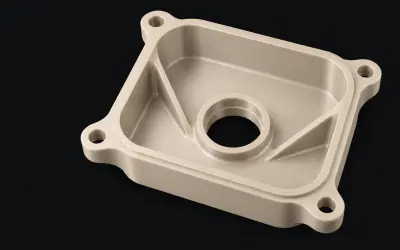
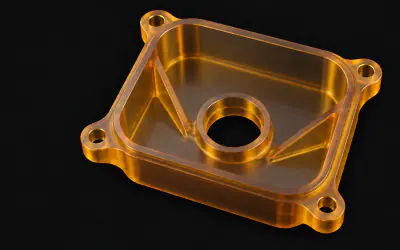
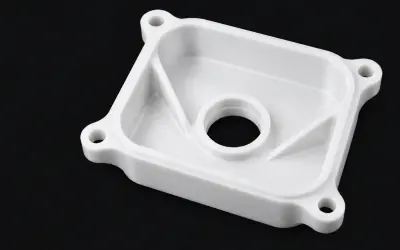
Valve components
Valve components with stability and chemical compatibility.


High performance · Custom parts
Stability for process components. We manufacture machined PPS parts for valves, insulators, and equipment exposed to compatible chemical agents.
Get your quoteQuote in 24 h · Engineering review
01 / Why choose this material
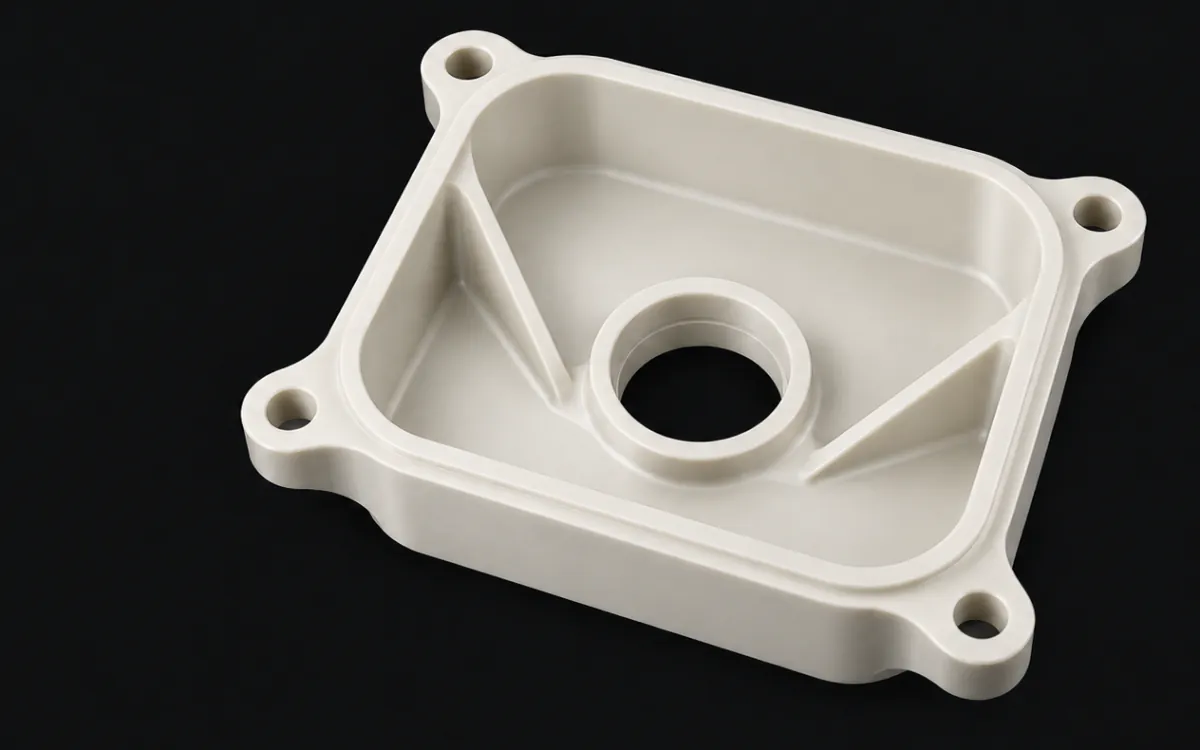
Thermoplastic for components exposed to chemical agents and high temperatures. It features low moisture absorption and good dimensional stability.
PPS (phenylsulfone polymer) is a high-performance thermoplastic with low moisture absorption. It is used when dimensional stability and chemical resistance are critical. The grade and reinforcements determine thermal and mechanical performance.
Learn about the CNC machining process ↗Mechanical reference · Proto&Go! material datasheet
Continuous temperature must be confirmed for the specific grade, load, and duration. Fiber-reinforced variants have different properties. The listed values are references from the published PDF; the supply grade and testing can alter them.
PPS Applications
Valve components with stability and chemical compatibility.
Insulators and connectors in suitable grades.
Machined gaskets according to design and sealing function.
Parts for chemical process equipment.
02 / A choice based on usage
These criteria help define the material, geometry, and working conditions before manufacturing.
01
Family reference for machining. Confirm properties of the supply grade.
02
Glass fiber reinforcement changes stiffness and properties. Fiber orientation influences the part.
03
Specify fluid, concentration, temperature, and exposure. No universal thermal range is assigned to all PPS grades.
Indicate loads, temperature, environment, and appearance needed. If the drawing requires a specific grade, include it in the request.
03 / Finishing also counts
Material and process define the surface. These are the key factors for specifying your part's appearance.
The part retains machining marks. Indicate adjustment surfaces and visible faces on the drawing.
For functional surfaces, define roughness and tolerances in the drawing. Feasibility is reviewed based on grade and geometry.
Include the expected appearance and usage conditions in your request to confirm the quote.
04 / From design to quote
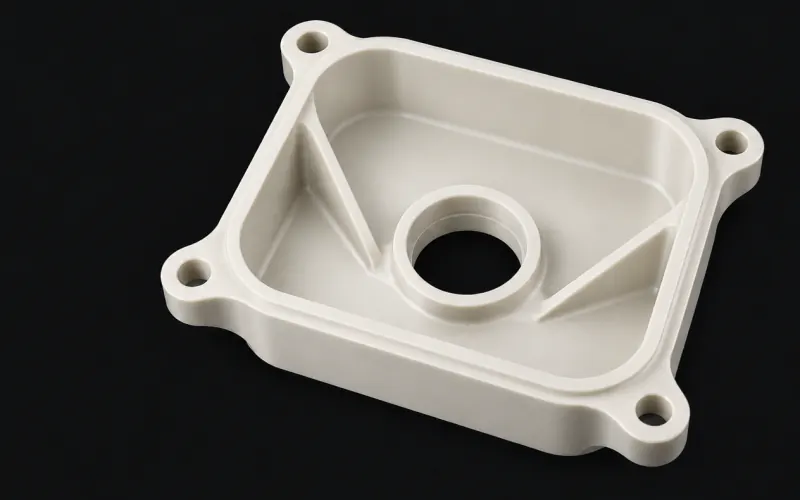
Milling and turning allow manufacturing PPS parts from a block, plate, or bar. The tool removes material to obtain faces, cavities, drilled holes, and contours according to the design.
Send a 3D model per part in STEP or a native supported format: SLDPRT, X_T, X_B, IPT, CATPART, PRT, SAT, or 3DM. Attach a PDF drawing for threads, inserts, or specific tolerances. STL is accepted only for 3D printing.
Upload your file and request a quoteFor dimensions without a specific tolerance, Proto&Go! applies ISO 2768-m. With a drawing, equivalent tolerances to IT11 can be assessed, depending on the geometry and requested dimensions. Attach the drawing and mark the functional surfaces.
Calculate a tolerance ↗In CNC, setup costs are distributed across the batch units. The final reduction depends on machining time and material.
Parts from 8 working days after confirming the order. The quote specifies the lead time based on geometry, material, finish, and quantity.
How much it costs to manufacture
The price of machining PPS depends on geometry, grade, tolerances, finish, and quantity. It includes material, preparation, and machining.
Check the catalog example to compare materials. To know the cost of your design, request a quote with your 3D file.
Frequently asked questions
Properties, applications, and manufacturing: answers to prepare your request.
Thermoplastic for components exposed to chemical agents and high temperatures. It presents low moisture absorption and good dimensional stability. Continuous temperature must be confirmed for the specific grade, load, and duration. Fiber-reinforced variants have other properties. The added values are references from the published PDF; the supply grade and test may change them.
We can manufacture valve components, insulators, and connectors, machined gaskets, and chemical equipment parts. CNC machining allows adapting the geometry to your 3D file. Define the loads, the environment, and the finish so we can review the application.
Define working temperature, loads, and contact chemical agents. Indicate if the drawing requires unreinforced PPS or glass fiber. The specific grade and semi-finished product allow confirming properties for component calculations.
Glass fiber modifies stiffness and dimensional stability, as well as other properties. A PPS GF30 should not be calculated using values from unreinforced PPS. Use the datasheet of the semi-finished product to be machined.
It can be an option if the grade is compatible with the fluid, pressure, and temperature. Also indicate load, duration, and sealing requirements. The name PPS alone does not fix the admissible valve temperature.
The price of machining PPS depends on geometry, grade, tolerances, finish, and quantity. It includes material, preparation, and machining. Upload the 3D file to the Proto&Go! platform to receive a quote with cost and lead time.
For dimensions without a specific tolerance, Proto&Go! applies ISO 2768-m. With a drawing, equivalent tolerances to IT11 can be assessed, depending on the geometry and requested dimensions. Attach the drawing and mark the functional surfaces.
Send a 3D model per part in STEP or a native supported format: SLDPRT, X_T, X_B, IPT, CATPART, PRT, SAT, or 3DM. Attach a PDF drawing for threads, inserts, or specific tolerances. STL is accepted only for 3D printing.
Compare before choosing
Your next part
Upload the 3D file. We review feasibility and send you the quote.
We use our own and third-party cookies to understand how the website is used and which campaigns work. You can accept them all, reject them all or choose which ones; the website works the same either way. Cookie policy.