Seals and bellows
Bushings and bellows to validate bending and assembly according to polyurethane.


Vacuum casting · Custom parts
Tactile feel, flexibility, and product texture. We manufacture flexible polyurethane parts for pre-production runs, including handles, push buttons, and protectors.
Get your quoteQuote in 24 h · Engineering review
01 / Why choose this material
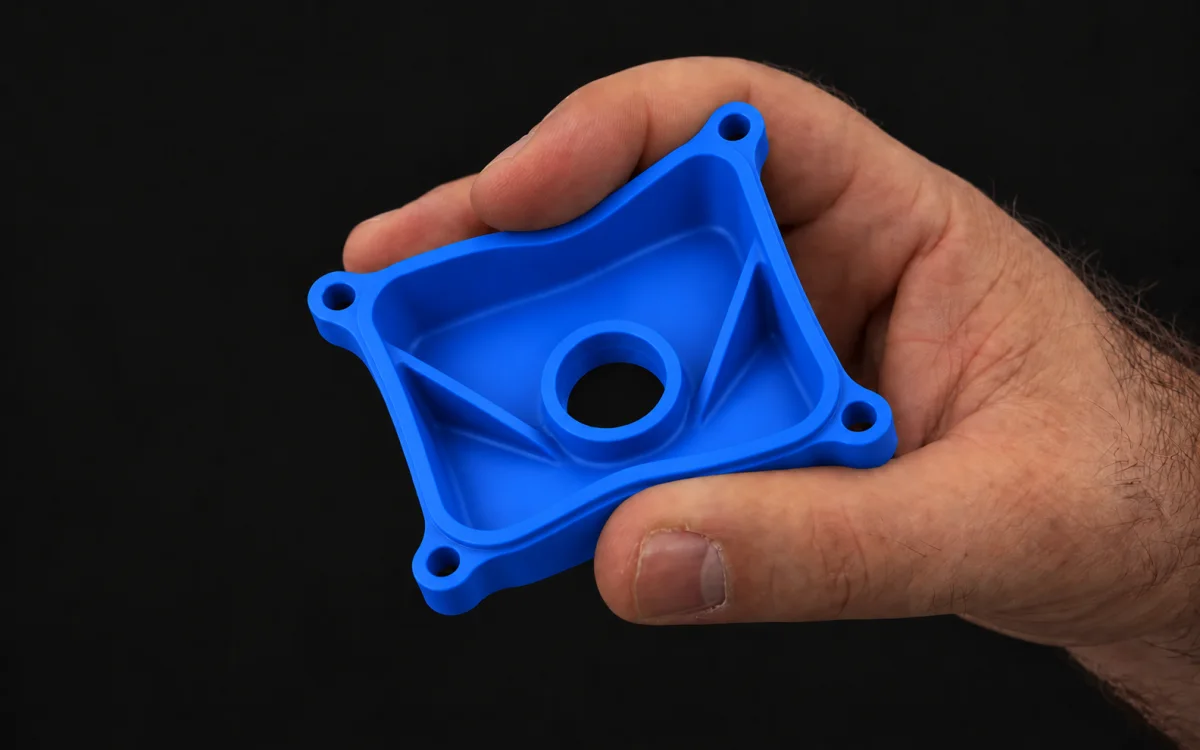
Elastic polyurethane for casting pre-production runs with product-like tactile feel, color, and texture. The formulation allows adapting hardness to the desired behavior.
Flexible PU is reproduced in silicone molds via vacuum casting. The polyurethane resin is selected to achieve the desired elastic behavior. Material hardness and geometry work together: two different wall thicknesses do not flex equally.
Learn about the vacuum casting process ↗Properties according to the selected flexible formulation
Catalog indicative density. Hardness, tensile strength, tear resistance, and temperature must be confirmed for the selected flexible resin. The old website PDF identifies DPI 8150 with 82 Shore D hardness; its values do not transfer to this flexible family.
Flexible PU applications
Bushings and bellows to validate bending and assembly according to polyurethane.
Grips that replicate the texture and feel of the product.
Push buttons and protectors with defined deformation.
Pre-production runs of elastic parts for presentation and testing.
02 / A choice based on usage
These criteria help define the material, geometry, and working conditions before manufacturing.
01
Specify the target hardness and how the part should flex. If possible, provide a reference for feel or function.
02
The pigmentation and mold surface allow approximating the appearance of the pre-production product.
03
Confirm the agents and usage conditions. Chemical resistance or tear strength depends on the formulation.
Indicate loads, temperature, environment, and appearance needed. If the drawing requires a specific grade, include it in the request.
03 / Finishing also counts
Define visible surfaces and the required result for your part. Requested treatments are included in the quote.
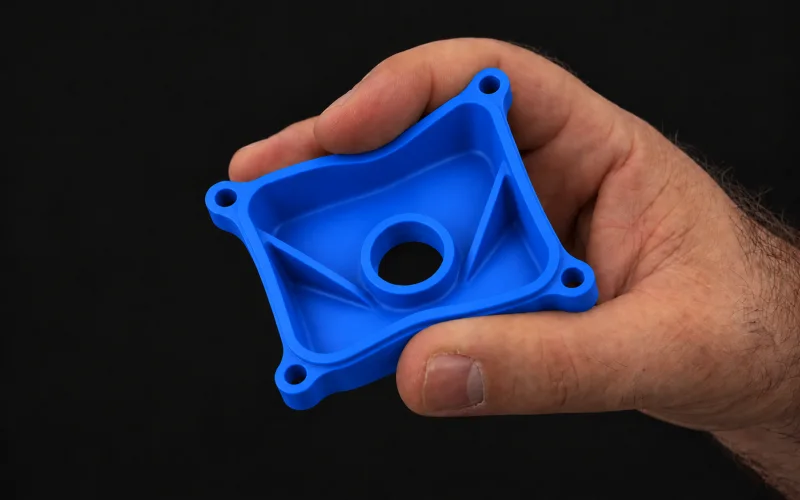
The surface reproduces the mold finish. Polyurethane resin, the pattern, and curing determine the final appearance.
The image could not be loaded. Try a different finish.
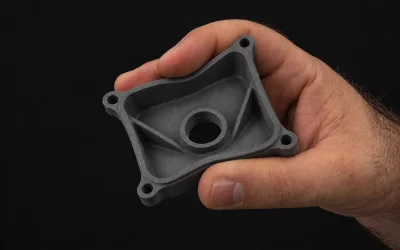
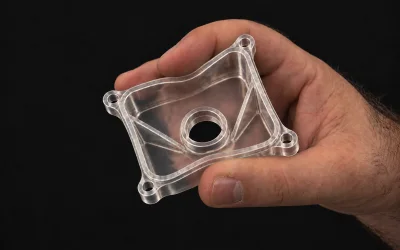
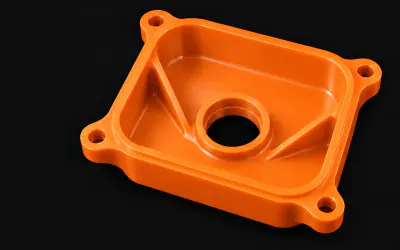
Reference images: material, geometry, and surface preparation influence the outcome. Special finishes are quoted upon request.
04 / From design to quote
Flexible PU manufacturing starts with a pattern that defines the shape and texture. From it, the silicone mold is prepared, vacuum casting is performed, and the polyurethane resin is cured before extracting and finishing the part.
Send a 3D model per part in STEP or a native supported format: SLDPRT, X_T, X_B, IPT, CATPART, PRT, SAT, or 3DM. Attach a PDF drawing for threads, inserts, or specific tolerances. STL is accepted only for 3D printing.
Upload your file and request a quotePolyurethane resin, the pattern, the mold, and shrinkage during curing influence the dimensions. Attach functional dimensions to confirm feasibility; CNC machining tolerances should not be transferred directly.
The pattern and mold are distributed among the pre-production parts. Geometry, polyurethane resin, and mold life condition the quantity and cost.
Parts from 10 working days after confirming the order. The quote specifies the lead time based on geometry, material, finish, and quantity.
How much it costs to manufacture
The price of a flexible PU part includes pattern preparation, the mold, polyurethane resin, and casting. Quantity and finishes determine how the pre-production cost is distributed.
Check the catalog example to compare materials. To know the cost of your design, request a quote with your 3D file.
Frequently asked questions
Properties, applications, and manufacturing: answers to prepare your request.
Elastic casting polyurethane for pre-production runs with product-like feel, color, and texture. The formulation allows adapting hardness to the desired behavior. Catalog reference density. Hardness, tensile strength, tear resistance, and temperature must be confirmed for the selected flexible resin. The old website PDF identifies DPI 8150 with 82 Shore D hardness; its values do not transfer to this flexible family.
You can manufacture gaskets and bellows, grips, buttons, and protectors, product pre-production runs. Vacuum casting in silicone molds allows repeating shapes and textures for a pre-production run. Define loads, environment, and finish so we can review the application.
You can indicate the target hardness to select an appropriate polyurethane resin. Final flexibility also depends on wall thickness and shape. Define the stroke, load, and expected feel to review the part behavior.
Yes. Casting allows reproducing mold textures and using compatible pigmentation. It is an option for pre-production grips, buttons, and protectors where feel and appearance matter. Color and texture must be specified in the quote.
No. Resistance to oils, solvents, heat, and tear varies by polyurethane resin. Provide contact agents and exposure conditions to confirm the formulation. Universal resistance to flexible polyurethane should not be assumed.
The price of a flexible PU part includes pattern preparation, the mold, polyurethane resin, and casting. Quantity and finishes determine how the pre-production cost is distributed. Upload the 3D file to the Proto&Go! platform to receive a quote with cost and lead time.
Polyurethane resin, the pattern, the mold, and shrinkage during curing influence the dimensions. Attach functional dimensions to confirm feasibility; CNC machining tolerances should not be transferred directly.
Send a 3D model per part in STEP or a native supported format: SLDPRT, X_T, X_B, IPT, CATPART, PRT, SAT, or 3DM. Attach a PDF drawing for threads, inserts, or specific tolerances. STL is accepted only for 3D printing.
Compare before choosing
Your next part
Upload the 3D file. We review feasibility and send you the quote.
We use our own and third-party cookies to understand how the website is used and which campaigns work. You can accept them all, reject them all or choose which ones; the website works the same either way. Cookie policy.