Damping elements
Damping elements with controlled deformation.


Flexible 3D printing · Custom parts
Parts that flex and recover their shape. We print TPA 90A with Multi Jet Fusion for protectors, grips, and damping elements.
Get your quoteQuote in 24 h · Engineering review
01 / Why choose this material
Polyamide elastomer for Multi Jet Fusion, suitable for flexible parts that recover their shape. Geometry and thickness influence perceived flexibility.
TPA is a polyamide elastomer for 3D printing. The 90A designation expresses a nominal Shore A hardness. The flexibility you perceive in a part also depends on its thickness, shape, and structure, so it is advisable to validate the functional geometry.
Learn about the MJF 3D printing process ↗Indicative values · TPA 90A for MJF
The 90A designation indicates nominal Shore A hardness, not tensile strength. Final values depend on the powder and printing parameters.
Property reference: Evonik · INFINAM TPA ↗
TPA 90A applications
Damping elements with controlled deformation.
Gripper tips adapted to contact with an object.
Footwear prototypes to validate geometry and flexion.
Flexible protectors for housings and mechanical assemblies.
02 / A choice based on usage
These criteria help define the material, geometry, and working conditions before manufacturing.
01
Walls, ribs, and thickness affect how the component deforms, even with the same material hardness.
02
Define the stroke, load, and movement repetition for protectors, grips, and dampers.
03
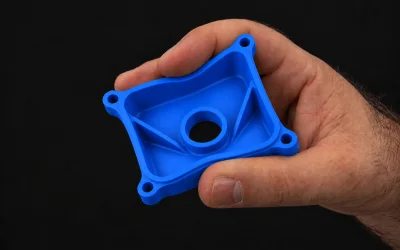
For runs with texture and product appearance, compare TPA printed with flexible PU in a silicone mold.
Indicate loads, temperature, environment, and appearance needed. If the drawing requires a specific grade, include it in the request.
03 / Finishing also counts
Material and process define the surface. These are the key factors for specifying your part's appearance.
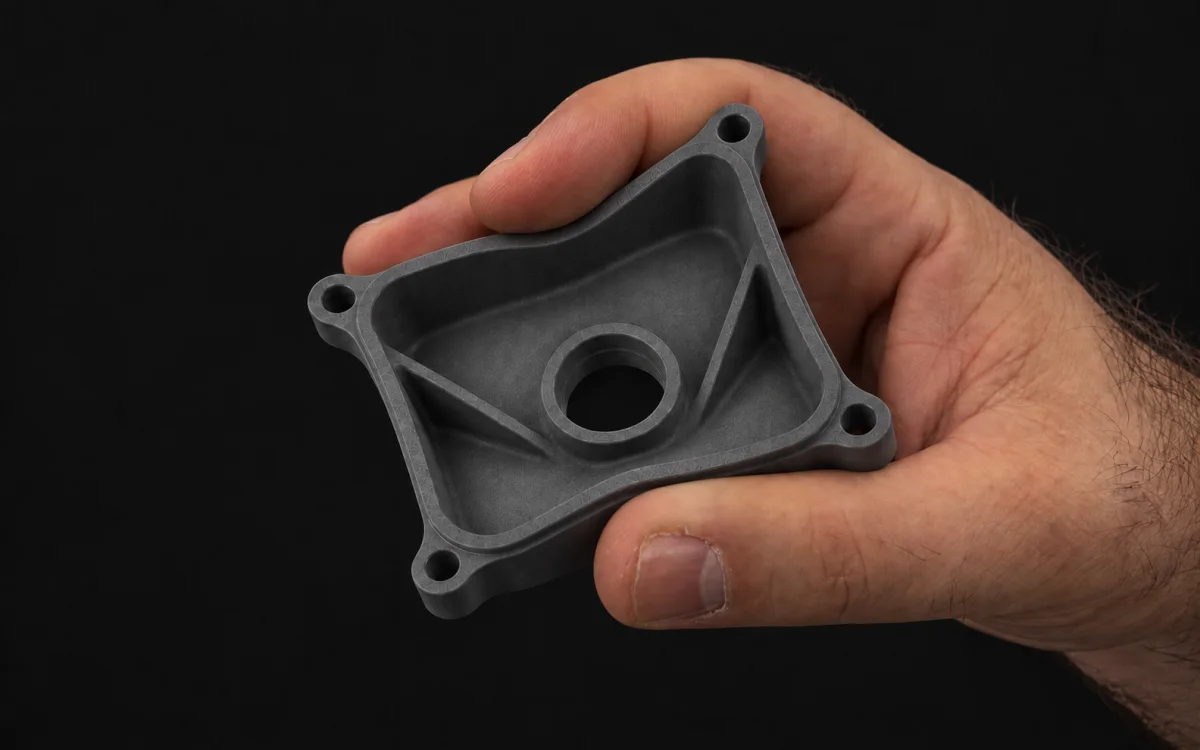
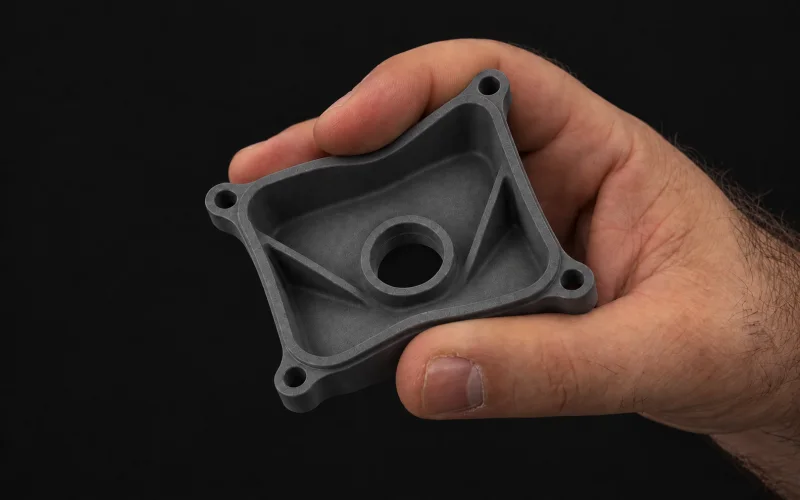
Matte and slightly granular surface typical of the process. Orientation and geometry influence the result.
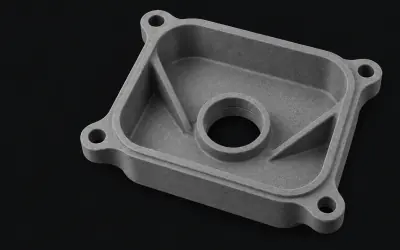
Define thicknesses and areas that must deform or fit. The reference part shows the material, not the behavior of any design.
Include the expected appearance and usage conditions in your request to confirm the quote.
04 / From design to quote
Multi Jet Fusion printing builds the TPA 90A part layer by layer on a powder bed. Afterward, it cools, the powder is removed, and the planned post-processing is performed. The design must allow cleaning internal cavities.
Upload a 3D model per part, for example in STEP or STL. SLDPRT, X_T, X_B, IPT, CATPART, PRT, SAT, and 3DM files are also accepted. Add a PDF drawing with functional dimensions and assembly requirements.
Upload your file and request a quotePrinting tolerances depend on geometry, orientation, and material. Indicate assembly dimensions on a drawing for the team to confirm feasibility. CNC machining tolerances are not automatically applied.
The price per part usually varies little with quantity. Producing more units does not imply the volume savings achievable with machining or molds.
Parts from 5 working days after confirming the order. The quote specifies the lead time based on geometry, material, finish, and quantity.
How much it costs to manufacture
The price of printing TPA 90A depends on material volume, geometry, manufacturing layout, and post-processing. Quantity usually reduces the unit cost slightly.
Check the catalog example to compare materials. To know the cost of your design, request a quote with your 3D file.
Frequently asked questions
Properties, applications, and manufacturing: answers to prepare your request.
Polyamide elastomer for Multi Jet Fusion, appropriate for flexible parts that recover their shape. Geometry and thickness influence perceived flexibility. The 90A designation indicates nominal Shore A hardness, not tensile strength. Final values depend on the powder and printing parameters.
You can manufacture damping elements, clamp grips, shoe prototypes, and flexible protectors. Multi Jet Fusion printing allows validating complex shapes without manufacturing a mold. Define loads, environment, and finish so we can review the application.
90A indicates the nominal Shore A hardness of the material. It is not a tensile strength value. Thickness and geometry greatly influence how much the finished part flexes, along with the powder and printing parameters.
TPA allows printing the geometry without manufacturing a mold. Flexible PU casting can replicate product color and texture in a short run. Compare quantity, hardness, appearance, and deformation before choosing the process.
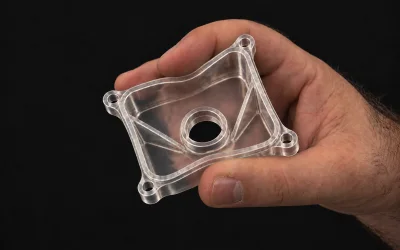
No. The 3D printing TPA in the catalog is opaque. If you need to combine flexibility and transparency, you can consider transparent flexible PU obtained via vacuum casting, checking the polyurethane resin, the thickness, and the finish.
The cost of printing TPA 90A depends on material volume, geometry, manufacturing layout, and post-processing. Quantity usually reduces the unit cost slightly. Upload the 3D file to the Proto&Go! platform to receive a quote with cost and lead time.
Printing tolerances depend on geometry, orientation, and material. Indicate assembly dimensions on a drawing for the team to confirm feasibility. CNC machining tolerances are not automatically applied.
Upload a 3D model per part, for example in STEP or STL. SLDPRT, X_T, X_B, IPT, CATPART, PRT, SAT, and 3DM files are also accepted. Add a PDF drawing with functional dimensions and assembly requirements.
Compare before choosing
Your next part
Upload the 3D file. We review feasibility and send you the quote.
We use our own and third-party cookies to understand how the website is used and which campaigns work. You can accept them all, reject them all or choose which ones; the website works the same either way. Cookie policy.