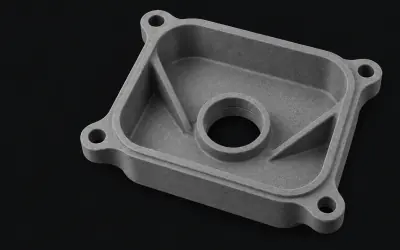
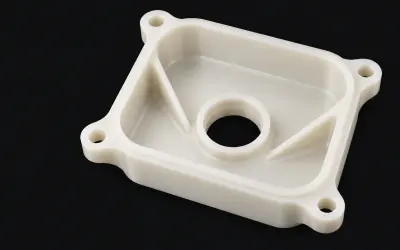
Fluid tanks and ducts
Tanks, lids, and ducts that have to be watertight.


3D Printing · Custom parts
Lightweight, watertight, and chemical resistant. We print tanks, ducts, and parts in contact with fluids in polypropylene with Multi Jet Fusion.
Get your quoteQuote in 24 h · Engineering review
01 / Why choose this material
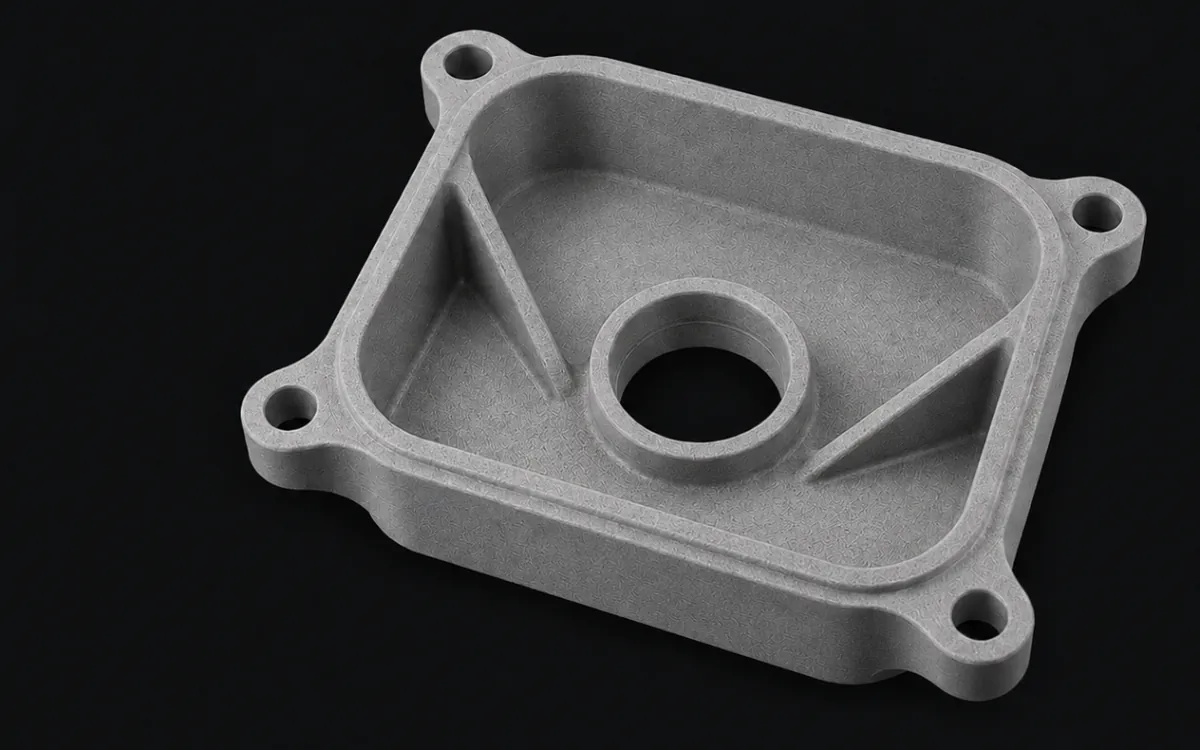
Polypropylene for Multi Jet Fusion. It is the lightest printed material, absorbs very little moisture, and resists acids, bases, and oils. It can be welded to injection-molded PP parts. It shrinks more than PA12: long flat parts should be reviewed beforehand.
MJF polypropylene is the lightest printed material: 0.89 g/cm³. It absorbs very little moisture, resists acids, bases, and oils, and can be welded to injection-molded PP parts. It shrinks more than PA12, so long flat parts are reviewed before manufacturing. It cannot be dyed.
Learn about the MJF 3D printing process ↗Reference · HP 3D HR PP enabled by BASF
Reference: HP 3D HR PP enabled by BASF. At 1.82 MPa the HDT is 60 °C. It cannot be dyed: it is delivered in its natural gray. Chemical compatibility depends on the agent, concentration, and temperature.
Property reference: HP · PP enabled by BASF ↗
Polypropylene applications
Tanks, lids, and ducts that have to be watertight.
Equipment parts that are in contact with chemicals.
Hinges integrated into lids and closures.
Prototypes of parts that will later be injection molded in PP.
02 / A choice based on usage
These criteria help define the material, geometry, and working conditions before manufacturing.
01
For water, oils, and many acids and bases. Specify the agent, concentration, and temperature to confirm it.
02
It is the same polymer as many production parts: a PP prototype can be welded to them or tested alongside them.
03
Natural gray only: it cannot be dyed. Avoid large, thin flat surfaces, which tend to warp.
Indicate loads, temperature, environment, and appearance needed. If the drawing requires a specific grade, include it in the request.
03 / Finishing also counts
Material and process define the surface. These are the key factors for specifying your part's appearance.
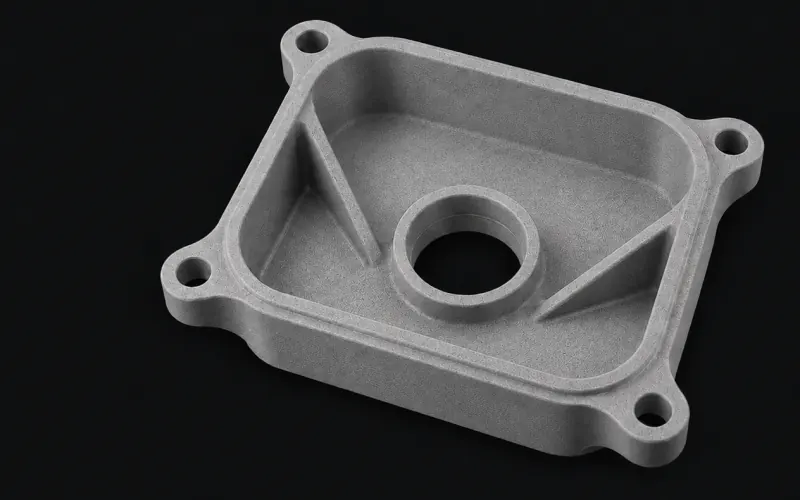
Matte and slightly granular surface typical of the process. Orientation and geometry influence the result.
Define thicknesses and areas that must deform or fit. The reference part shows the material, not the behavior of any design.
Include the expected appearance and usage conditions in your request to confirm the quote.
04 / From design to quote
Multi Jet Fusion printing builds the polypropylene part layer by layer on a powder bed. Afterward, it cools, the powder is removed, and the specified post-processing is performed. The design must allow for cleaning internal cavities.
Upload a 3D model per part, for example in STEP or STL. SLDPRT, X_T, X_B, IPT, CATPART, PRT, SAT, and 3DM files are also accepted. Add a PDF drawing with functional dimensions and assembly requirements.
Upload your file and request a quotePrinting tolerances depend on geometry, orientation, and material. Indicate assembly dimensions on a drawing for the team to confirm feasibility. CNC machining tolerances are not automatically applied.
The price per part usually varies little with quantity. Producing more units does not imply the volume savings achievable with machining or molds.
Parts from 5 working days after confirming the order. The quote specifies the lead time based on geometry, material, finish, and quantity.
How much it costs to manufacture
The price of printing polypropylene depends on material volume, geometry, build orientation, and post-processing. Quantity usually reduces the unit cost only slightly.
Check the catalog example to compare materials. To know the cost of your design, request a quote with your 3D file.
Frequently asked questions
Properties, applications, and manufacturing: answers to prepare your request.
Polypropylene for Multi Jet Fusion. It is the lightest printed material, absorbs very little moisture, and resists acids, bases, and oils. It can be welded to injection-molded PP parts. It shrinks more than PA12: long flat parts should be reviewed beforehand. Reference: HP 3D HR PP enabled by BASF. At 1.82 MPa the HDT is 60 °C. It cannot be dyed: it is delivered in its natural gray. Chemical compatibility depends on the agent, concentration, and temperature.
You can manufacture fluid tanks and ducts, parts in contact with chemicals, living hinges, and prototypes of injection-molded PP parts. Multi Jet Fusion printing allows validating complex shapes without manufacturing a mold. Define the loads, environment, and finish so we can review the application.
No. Polypropylene does not absorb dye the way polyamides do, so it is delivered in its natural gray. If you need a black part, consider dyed PA12 or PA11.
PP absorbs very little moisture and MJF parts come out dense, which is why it is used in tanks and ducts. For pressure or critical fluids, validate a sample with the real fluid and pressure.
MJF PP allows internal geometries and parts without a mold; machining starts from a PP block and gives better tolerances on flat faces. Choose based on the shape and dimensions you need.
The price of printing polypropylene depends on material volume, geometry, build orientation, and post-processing. Quantity usually reduces the unit cost only slightly. Upload the 3D file to the Proto&Go! platform to receive a quote with cost and lead time.
Printing tolerances depend on geometry, orientation, and material. Indicate assembly dimensions on a drawing for the team to confirm feasibility. CNC machining tolerances are not automatically applied.
Upload a 3D model per part, for example in STEP or STL. SLDPRT, X_T, X_B, IPT, CATPART, PRT, SAT, and 3DM files are also accepted. Add a PDF drawing with functional dimensions and assembly requirements.
Compare before choosing
Your next part
Upload the 3D file. We review feasibility and send you the quote.
We use our own and third-party cookies to understand how the website is used and which campaigns work. You can accept them all, reject them all or choose which ones; the website works the same either way. Cookie policy.