Clips and snap fits
Latches and tabs that are assembled and disassembled without breaking.


3D Printing · Custom parts
Nylon that bends before it breaks. We print clips, hinges, and impact-prone parts in PA11 with Multi Jet Fusion.
Get your quoteQuote in 24 h · Engineering review
01 / Why choose this material
Polyamide 11 for Multi Jet Fusion, made from plant-based castor oil. It stretches up to 50% before breaking, versus 20% for PA12: it is the choice for parts that take impacts or that open and close.
PA11 prints just like PA12, in a powder bed and without supports, with the same design rules. The difference is in the material: it stretches up to 50% before breaking, so a clip or a thin wall flexes where PA12 would crack. It is made from castor oil.
Learn about the MJF 3D printing process ↗Reference · HP 3D HR PA 11
Reference: HP 3D HR PA 11. The 183 °C corresponds to heat deflection temperature (HDT) at 0.45 MPa; at 1.82 MPa it is 50 °C. These are not continuous use temperatures.
Property reference: HP · PA11 ↗
PA11 applications
Latches and tabs that are assembled and disassembled without breaking.
Lids with an integrated hinge that open many times.
Guards and brackets that may take knocks or falls.
Thin-walled ducts that have to adapt to the assembly.
02 / A choice based on usage
These criteria help define the material, geometry, and working conditions before manufacturing.
01
If the part has clips, hinges, or takes impacts, PA11. If it only needs to be rigid, PA12 costs less.
02
With the same wall, PA11 allows more deformation without breaking. Size the clip travel with that margin.
03
Under high load (1.82 MPa) it withstands 50 °C before deforming. If the part works hot and under load, consider PA12 GB.
Indicate loads, temperature, environment, and appearance needed. If the drawing requires a specific grade, include it in the request.
03 / Finishing also counts
Define visible surfaces and the required result for your part. Requested treatments are included in the quote.
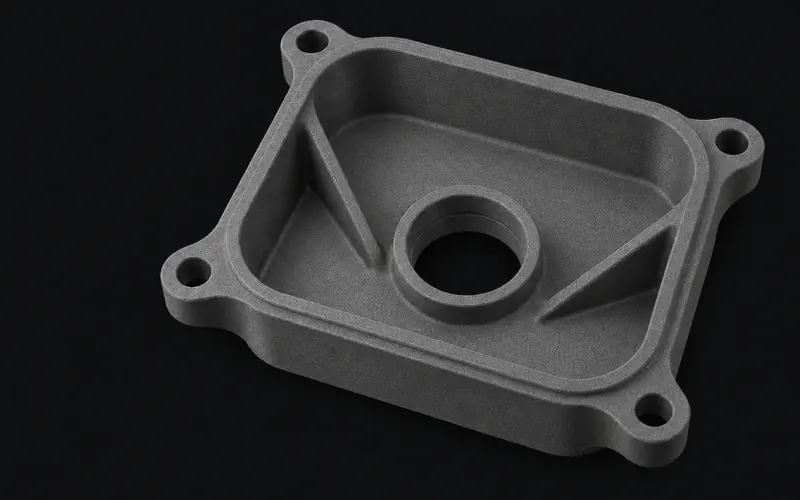
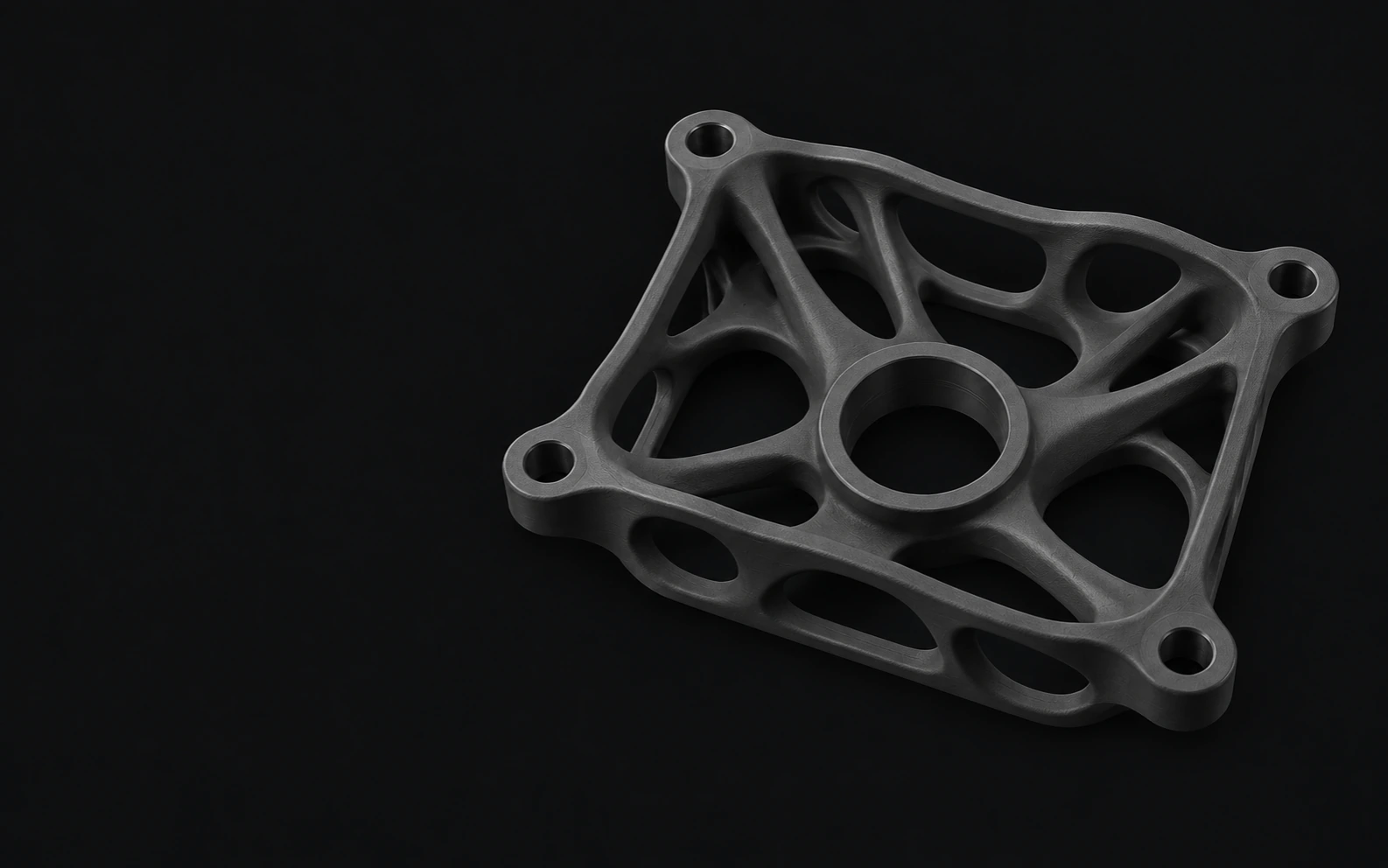
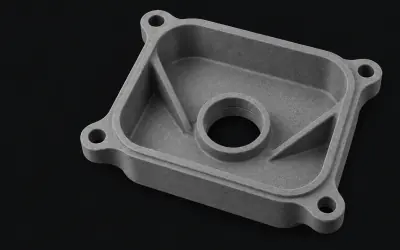
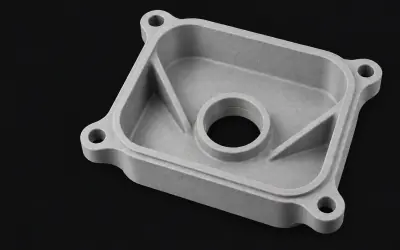
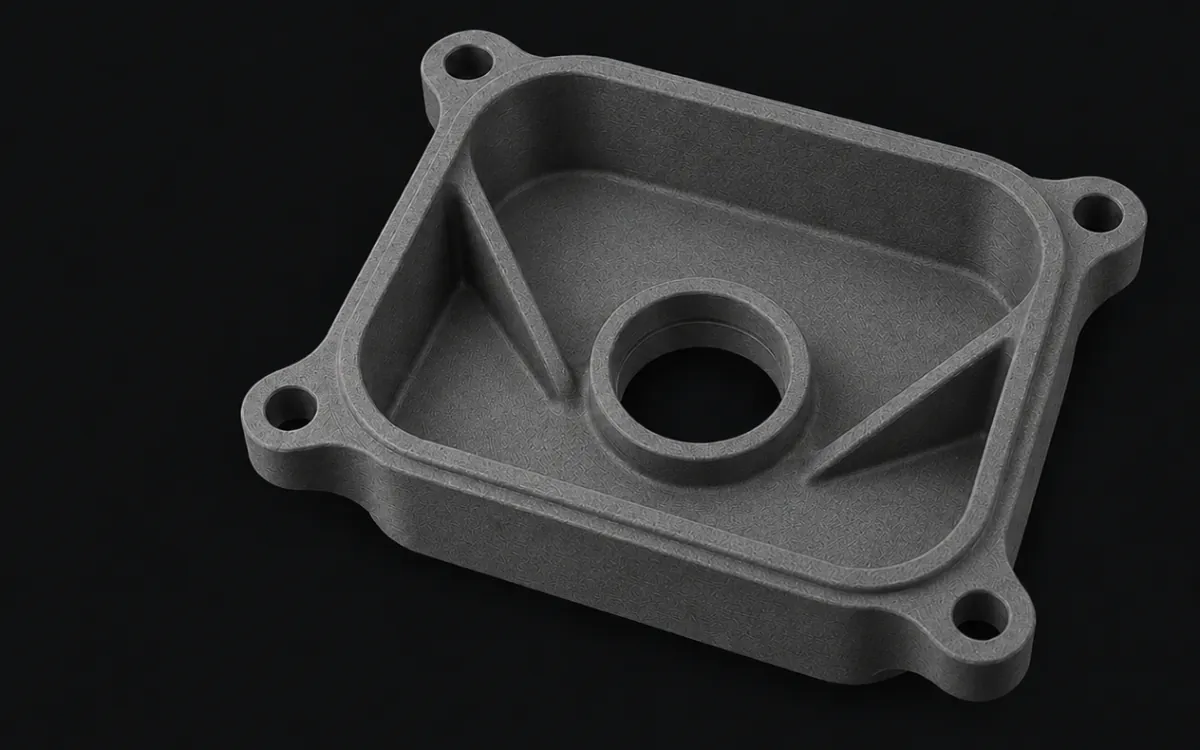
Matte and slightly granular surface typical of the process. Orientation and geometry influence the result.
The image could not be loaded. Try a different finish.
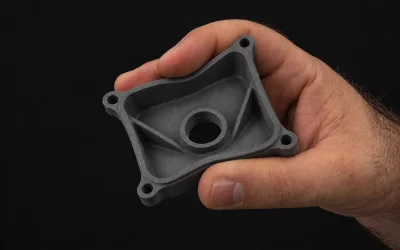
Reference images: material, geometry, and surface preparation influence the outcome. Special finishes are quoted upon request.
04 / From design to quote
Multi Jet Fusion printing builds the PA11 part layer by layer on a powder bed. Afterward, it cools, the powder is removed, and the specified post-processing is performed. The design must allow for cleaning internal cavities.
Upload a 3D model per part, for example in STEP or STL. SLDPRT, X_T, X_B, IPT, CATPART, PRT, SAT, and 3DM files are also accepted. Add a PDF drawing with functional dimensions and assembly requirements.
Upload your file and request a quotePrinting tolerances depend on geometry, orientation, and material. Indicate assembly dimensions on a drawing for the team to confirm feasibility. CNC machining tolerances are not automatically applied.
The price per part usually varies little with quantity. Producing more units does not imply the volume savings achievable with machining or molds.
Parts from 5 working days after confirming the order. The quote specifies the lead time based on geometry, material, finish, and quantity.
How much it costs to manufacture
The price of printing PA11 depends on material volume, geometry, build orientation, and post-processing. Quantity usually reduces the unit cost only slightly.
Check the catalog example to compare materials. To know the cost of your design, request a quote with your 3D file.
Frequently asked questions
Properties, applications, and manufacturing: answers to prepare your request.
Polyamide 11 for Multi Jet Fusion, made from plant-based castor oil. It stretches up to 50% before breaking, versus 20% for PA12: it is the choice for parts that take impacts or that open and close. Reference: HP 3D HR PA 11. The 183 °C corresponds to deformation under load (HDT) at 0.45 MPa; at 1.82 MPa it is 50 °C. These are not continuous use temperatures.
You can manufacture clips and snap fits, living hinges, impact-prone parts, and thin-walled ducts. Multi Jet Fusion printing allows validating complex shapes without manufacturing a mold. Define the loads, environment, and finish so we can review the application.
Both are Multi Jet Fusion polyamides with the same design rules. PA11 stretches up to 50% before breaking, versus 20% for PA12, and withstands impacts better. PA12 is slightly stiffer and more economical.
Yes, it is the most suitable MJF material for them. Even so, thickness, length, and number of cycles decide whether the hinge holds up: state the use when requesting the quote and validate a sample.
PA11 powder is made from castor oil, a renewable raw material. The printed part is a standard engineering polyamide: it is not biodegradable.
The price of printing PA11 depends on material volume, geometry, build orientation, and post-processing. Quantity usually reduces the unit cost only slightly. Upload the 3D file to the Proto&Go! platform to receive a quote with cost and lead time.
Printing tolerances depend on geometry, orientation, and material. Indicate assembly dimensions on a drawing for the team to confirm feasibility. CNC machining tolerances are not automatically applied.
Upload a 3D model per part, for example in STEP or STL. SLDPRT, X_T, X_B, IPT, CATPART, PRT, SAT, and 3DM files are also accepted. Add a PDF drawing with functional dimensions and assembly requirements.
Compare before choosing
Your next part
Upload the 3D file. We review feasibility and send you the quote.
We use our own and third-party cookies to understand how the website is used and which campaigns work. You can accept them all, reject them all or choose which ones; the website works the same either way. Cookie policy.