

Choose material.
Define the result.
More lightness, more resistance, or the finish you seek. Find the suitable material to manufacture your design.
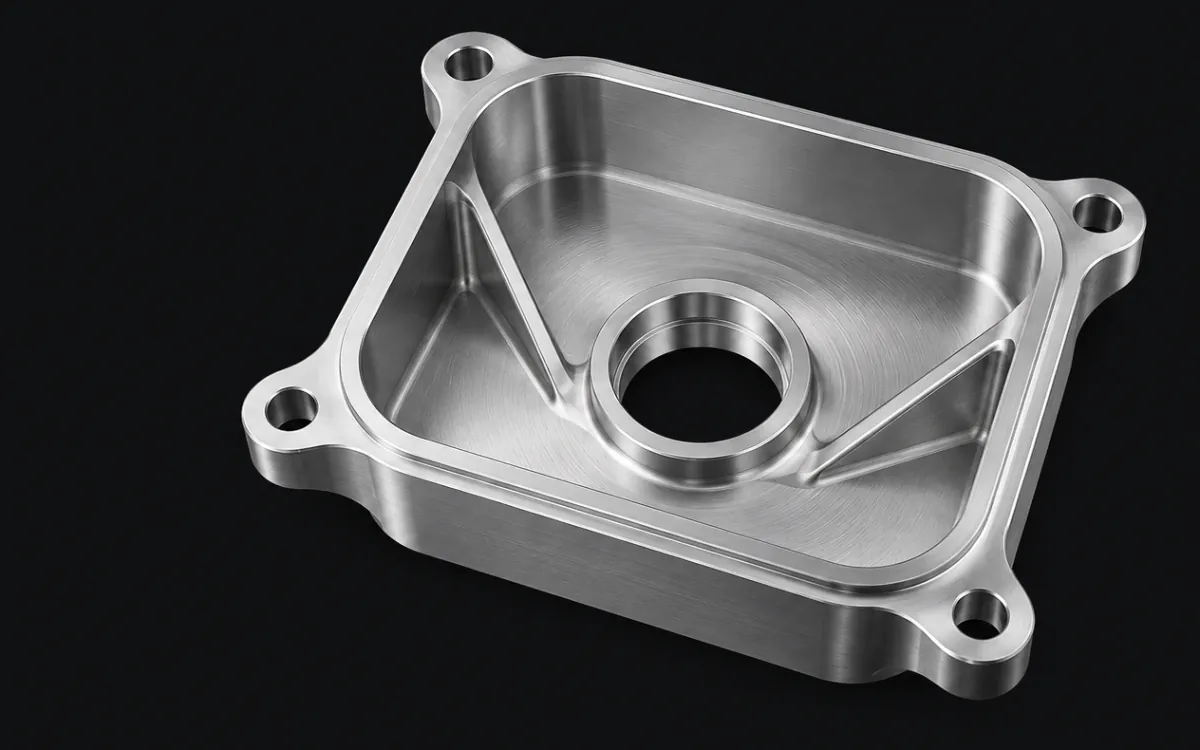
Loading the following sample.
Metal · CNC machining
Aluminum
Lightweight · Easy to machine
Material explorer
Compare materials
Same part.
Compare its price.
Choose a material and discover how much it would cost to manufacture this part.
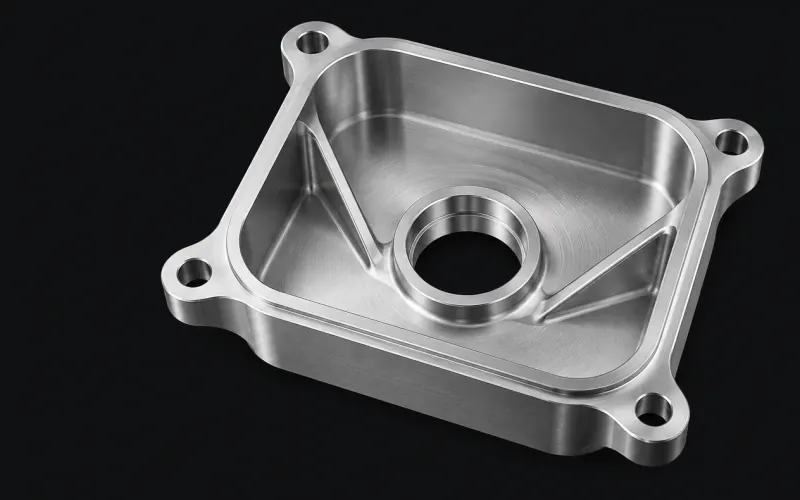
The same part in each material
Indicative price.
Excluding VAT and shipping.
Choose a material
33 materials · price per part
Frequently asked questions
Materials,
question by question.
Choose material
How do I choose the right material to manufacture a part?
Start with what the part needs to withstand: load, temperature, humidity, chemicals, friction, or electrical contact. Then consider appearance, quantity, and process. In the material explorer at Proto&Go!, you can filter by process and those needs, and an engineer reviews each quote to ensure the material fits the part.
What material is best for a functional prototype?
It depends on what you want to validate. Aluminum works well for lightweight mechanical parts; POM for fits and sliding parts; PA12 in 3D printing, for complex shapes; and ABS, for housings and presentation prototypes that are later painted.
Metal or plastic: what is best for a custom part?
Metal offers rigidity, mechanical strength, conductivity, and good thermal performance. Plastic weighs much less, provides electrical insulation, resists many chemicals, and is usually more economical. If the part does not support high loads or heat, a technical plastic like POM is usually sufficient.
What material is cheaper to manufacture a part?
In plastics, ABS, HDPE, PP, and PVC are cost-effective; in metal, aluminum and carbon steel. However, in CNC machining, price depends heavily on machine time, and a material that machines quickly can be cheaper than one that is cheaper in the as-machined state. The price comparator on this page shows the difference for the same part.
Which material is lighter for a part?
Among the plastics in the catalog, PP and HDPE are the lightest, with densities below 1 g/cm³. Among metals, aluminum weighs about three times less than steel: 2.71 versus 7.85 g/cm³. If weight is critical and the part supports load, aluminum is usually the best balance.
How do I calculate the weight of a part based on the material?
Multiply the volume of the part, which your CAD program provides, by the material density. A 100 cm³ part weighs about 271 g in aluminum, 785 g in carbon steel, about 140 g in POM, and 91 g in polypropylene. Each material datasheet indicates its indicative density.
Metals
Aluminum, stainless steel, or carbon steel: which do I choose?
Aluminum is lightweight, corrosion-resistant, and machines quickly: it is the standard option for brackets, housings, and prototypes. Stainless steel is the choice when there is moisture, cleaning requirements, or contact with process products. Carbon steel provides strength for shafts and bolts and allows heat treatment, but it requires protection against corrosion.
Which aluminum alloy to choose: 6061, 6082, 7075, or 5083?
6061 offers a good balance between machining, strength, and weldability, and 6082 is the reference for structural parts. 7075 has much higher strength, but its weldability and corrosion resistance require attention. 5083 resists corrosion very well and is common in marine environments.
Stainless steel 304 or 316L: which do I need?
AISI 304 is the general-purpose stainless steel, with good corrosion resistance. AISI 316L resists chloride environments better, such as seawater, some cleaning agents, or certain process products. If the part will operate in one of those environments, 316L is recommended.
Copper, brass, or bronze: how do they differ?
Copper is the best conductor of electricity and heat, which is why it is used in contacts, terminals, and heat sinks. Brass, an alloy of copper and zinc, machines well and is used in fittings, hardware, and decorative parts. Bronze, typically with tin, excels in bushings, bearings, and guides that operate with friction.
Which metal does not oxidize for an outdoor part or one in contact with water?
No metal resists equally in all environments. Stainless steel, especially 316L with chlorides, and aluminum, especially anodized or in 5083 alloy, are the usual options. Brass resists the atmosphere well, but some alloys degrade in saltwater. Carbon steel needs bluing, zinc plating, nickel plating, or painting.
Plastics
Which engineering plastic to choose for a machined part?
POM is rigid, stable, and slides smoothly: it's the standard choice for precision parts. nylon PA6 is tough and wear-resistant, but absorbs moisture. PET combines stability and wear resistance. For heat, chemical, or high-load applications, we offer PEEK, PEI, and PPS.
POM or nylon for gears, bushings, and guides?
Both resist wear well. POM absorbs very little moisture and maintains its dimensions, making it preferred for mechanisms and precise fits. Nylon PA6 is tougher and withstands impacts better, but moisture changes its dimensions and properties.
Are Delrin and POM the same?
Not exactly. Delrin is the trade name for a homopolymer POM, the POM-H. Copolymer POM, or POM-C, is another variant with very similar properties and slightly lower density. The Proto&Go! catalog lists both under POM · Acetal.
Which plastic withstands high temperatures?
High-performance plastics. As a reference for continuous use, PTFE reaches about 260 °C, PEEK about 250 °C, and PEI about 170 °C. The actual allowable temperature depends on the load and duration, so please specify them when requesting a quote.
Which plastic resists chemicals?
PTFE has the broadest chemical resistance. PP, HDPE, rigid PVC, PPS, and PEEK also resist many acids, bases, or solvents. None resist all: compatibility depends on the agent, concentration, and temperature.
Which plastic has low friction for sliding parts?
POM and PTFE have the lowest friction. PTFE is the most slippery, but deforms slowly under load, so it's reserved for low loads. PET and PA6 also work well in guides and bushings. In metal, bronze is the reference for sliding bearings.
PMMA or polycarbonate for a transparent part?
PMMA or acrylic offers more transparency and is ideal for display parts, diffusers, and showcases. Polycarbonate is the option when impact resistance also matters. In both cases clarity depends on polishing, and for short runs there is transparent polyurethane in a silicone mold. For one or a few 3D printed parts, clear resin, which is always delivered polished.
Which material insulates electricity and which conducts it?
Almost all plastics in the catalog are insulators in their standard grade. PEI, glass-fiber reinforced PBT, and bakelite are often used in supports and electrical parts. All metals conduct, and copper is the best conductor for contacts and terminals.
Materials by process
What materials can be machined with CNC?
At Proto&Go!, we machine metals such as aluminum, stainless steel, carbon steel, copper, brass, and bronze, and plastics such as ABS, POM, nylon, HDPE, polycarbonate, acrylic, PET, PP, PVC, glass-fiber reinforced PBT, bakelite, PEEK, PEI, PPS, and Teflon. For more details, visit the CNC machining page.
What materials are available for 3D printing?
Proto&Go! 3D prints with two technologies. With HP Multi Jet Fusion, in PA12, PA11, PA12 GB, and polypropylene for functional parts, and in TPA 90A for flexible parts. With stereolithography, in white, black, and clear resin for smooth, finely detailed prototypes.
What materials are used for silicone molds and vacuum casting?
Polyurethane casting is available in four versions: rigid, rigid transparent, flexible, and flexible transparent. They reproduce the mold's detail and texture and are suitable for pre-production runs with a product-like appearance.
What metals can be cut and bent from sheet metal?
For sheet metal cutting and bending, Proto&Go! works with aluminum, stainless steel, carbon steel, copper, and brass.
What flexible material can I use for a cover or a grip?
You can use TPA for 3D printing or flexible polyurethane for silicone molds. The choice depends on the quantity, finish, and hardness you need. Thickness and shape also influence how much the part flexes.
What plastic should I choose for a housing that can be painted?
ABS machined parts are a good option for housings, covers, and presentation prototypes, and can be painted in matte, satin, or glossy finishes. For multiple units, you can also consider rigid polyurethane in a silicone mold. Indicate the color and finish when requesting a quote.
Price and availability
How much does the material influence the price of a part?
Quite a bit, but not just due to the raw material cost. In machining, cutting speed matters a lot: aluminum or POM machine quickly, while stainless steel or PEEK machine more slowly. The price comparator on this page shows the indicative price of the same part in each material, and the Proto&Go! quote gives the exact price for yours.
Does 3D printing become cheaper per part if I order more units?
In 3D printing, the price per part varies little with quantity. In CNC machining, spreading the setup cost across multiple parts usually reduces the unit price more. Silicone molds also spread the cost of the master pattern and the mold.
Does the price of a part include painting, polishing, or anodizing?
Special finishes, such as painting, polishing, or anodizing, are indicated when requesting a quote and are quoted separately. The Proto&Go! calculator considers a standard finish, excluding VAT and shipping.
Can I manufacture a part in a material not listed in the catalog?
Yes, you can check. Write to info@protoandgo.com or specify the material or exact alloy in the order notes, and the Proto&Go! team will check its availability and lead time.
Complete datasheets
Get to know every material.
Properties, applications, and manufacturing, material by material.
Is it clear to you?
Choose the material
and upload your part.
Process, material, finish, and quantity on the platform. You get the quote in 24 hours.
It opens in a new tab. Accepted formats: